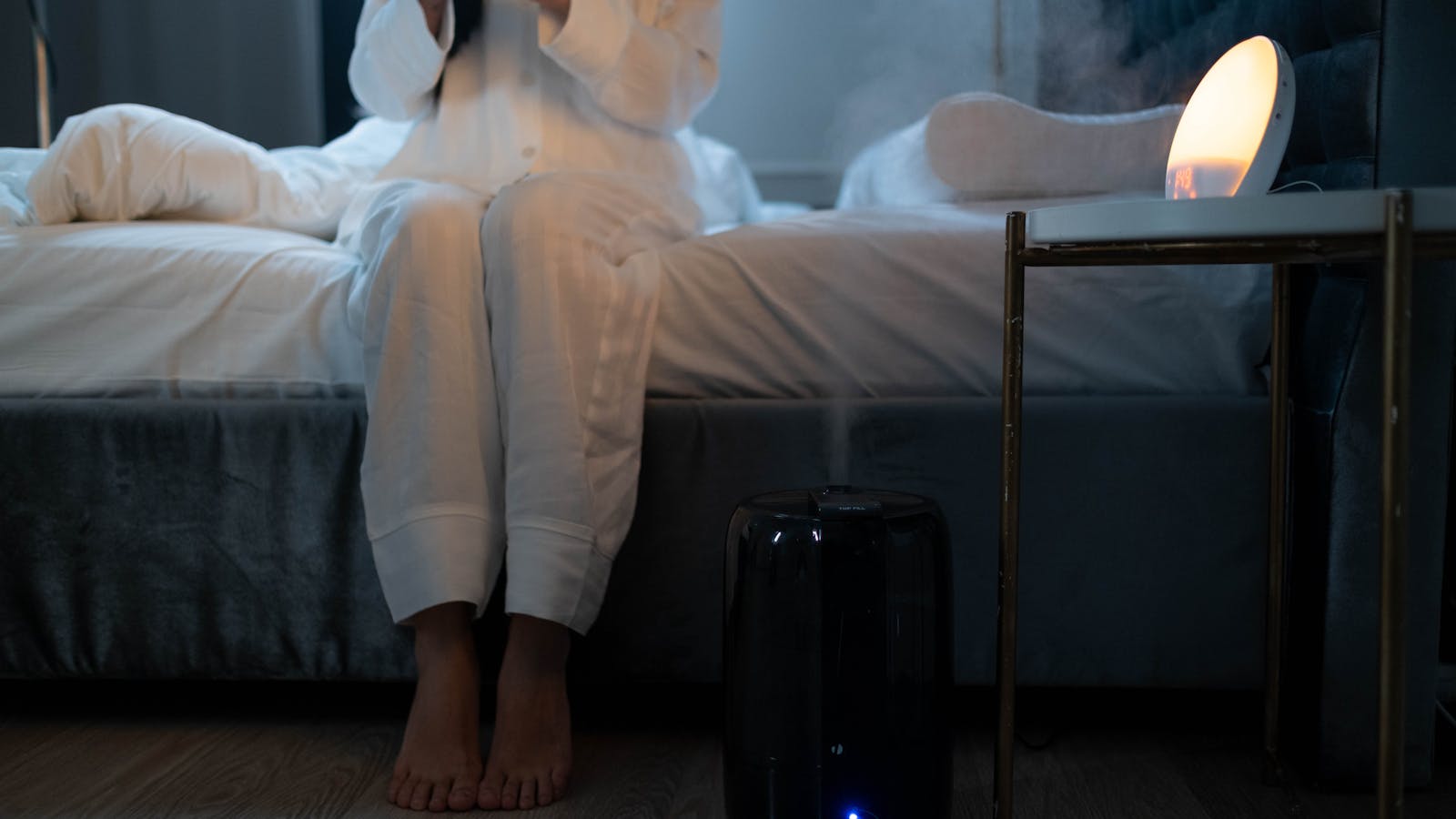
Air Purifier Placement in a Bedroom: Where It Works Best
A bedroom air purifier can underperform even when the unit itself is fine. The problem is often placement, not the product. A purifier that is hidden beside the bed, blocked by curtains, jammed into a corner, or crowded by furniture can move less air than the room actually needs.
That matters because bedroom use is different from daytime use in a larger room. Readers usually want a purifier close enough to help overnight, quiet enough to live with, and open enough to move air well. Those goals can conflict if the unit is placed only where it feels convenient instead of where airflow works best.
This guide focuses on placement only. If you are still comparing which purifier to buy, start with HealthGlean’s small-bedroom air purifier guide. If your real problem is sizing, use the CADR room-size guide. If performance dropped over time, the issue may be maintenance instead, and the filter replacement and ozone safety guide is the better next step.
Why Placement Changes Bedroom Purifier Performance
Air purifiers work best when air can move in and out of the unit without being trapped immediately by walls, fabric, or bulky furniture. A purifier does not help much if the intake is starved or the cleaned air is pushed into a dead zone instead of circulating through the room.
That is why the obvious empty corner is often the wrong place. It keeps the machine out of the way, but it can also reduce how much room air actually passes through the filter. The same problem shows up when a unit is tucked behind a nightstand, blocked by bedding, or placed where curtains move against the intake or exhaust.
In a bedroom, placement affects three things at once: airflow, noise experience, and how consistently the purifier gets used. The best spot is usually the one that keeps airflow open without making the machine feel intrusive at night.
Best Places To Put An Air Purifier In A Small Bedroom
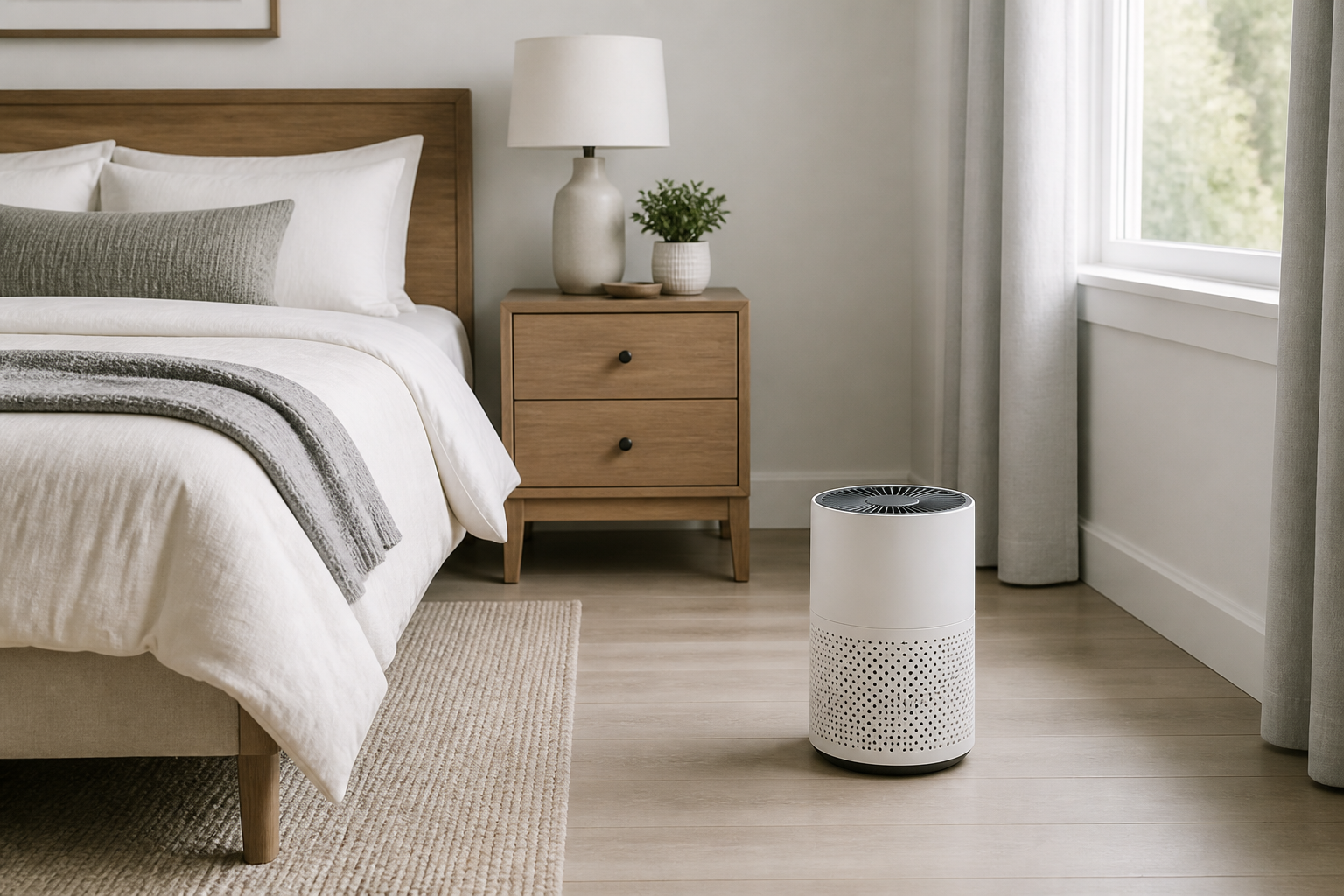
The best bedroom placement is usually an open area a few feet away from the bed, with enough clearance around the purifier for air to move freely. It should be close enough to support the part of the room where you spend time, but not pressed directly against bedding, curtains, or a wall.
For many small bedrooms, that means placing the unit on an open stretch of floor near the bed or along a low piece of furniture that does not block the intake or output. The exact best location depends on the room layout, but open airflow matters more than symmetry.
If the bedroom has one main sleeping zone and one more open path for air movement, lean toward the open path. Purifiers generally work better when they are allowed to circulate air across the room instead of only into a tight pocket beside the bed.
Where Not To Put It
Tight corners
A tight corner is one of the most common bad placements because it looks tidy while limiting airflow. Corners can restrict how easily room air reaches the purifier and how well cleaned air spreads back out.
Behind curtains
Curtains can block both intake and output. Even light fabric can interrupt airflow enough to make a purifier feel weaker than it should.
Behind doors
If a bedroom door swings in front of the unit or partly traps it, airflow and convenience both suffer. A purifier works better when it does not compete with opening and closing the room.
Pressed against walls or furniture
Most purifiers need breathing room. If the intake or exhaust is too close to a wall, dresser, shelf, or bed frame, performance can fall even though the machine is technically running.
Too close to soft surfaces
Bedding, upholstered furniture, hanging blankets, and soft storage can all interrupt air movement more than people expect. Keep the purifier away from anything that behaves like a partial barrier.
Bed Distance, Noise, And Nighttime Use
Bedroom placement is not only about airflow. It is also about whether the purifier is tolerable all night. A strong spot on paper may be the wrong spot if the sound bothers you enough that you stop using the machine overnight.
That is why many readers do better with a practical compromise: run the purifier higher before bed, then lower the speed once the room is settled for sleep. This usually works better than putting the purifier right next to your head and hoping noise will not matter.
If the purifier feels loud at the bedside, move it farther away while keeping the airflow path open. A little extra distance can make nighttime use easier without sacrificing as much performance as a blocked placement would.
Common Layout Mistakes
Choosing the neatest spot instead of the best airflow spot
Readers often pick the place that hides the machine best. That is understandable, but it can create poor airflow and weaker results.
Pushing the purifier flush against the wall
If the purifier has rear or side airflow needs, wall contact can reduce performance quickly. Even when it does not fully block the unit, it can reduce circulation quality.
Letting bedding or curtains drift into the unit
Soft materials can partially block air movement and make the purifier less effective than it should be.
Assuming one room edge covers the whole room equally
Bedrooms often have awkward airflow patterns because of doors, windows, closets, beds, and dressers. A purifier placed at one extreme edge may not feel as effective as a more central open-flow placement.
When Placement Is Not The Real Problem
If you improve placement and the bedroom purifier still feels weak, the issue may be something else. A unit that is undersized for the room can struggle even in a better location. A clogged or overdue filter can also make performance feel worse. In some rooms, open doors, open windows, or daily airflow from adjoining spaces can keep reloading the room faster than a smaller purifier can keep up.
This is where it helps to separate placement from capacity. Placement can improve a decent setup. It cannot fully rescue a purifier that is too small for the space or overdue for maintenance.
If you think the issue is sizing instead of placement, use HealthGlean’s air purifier CADR and room-size guide. If you suspect maintenance is the real issue, use the filter replacement and ozone safety guide.
What To Check Before Replacing The Unit
- Airflow clearance: Make sure the intake and exhaust are not crowded by walls, furniture, curtains, or bedding.
- Room-size fit: Check whether the purifier is realistically sized for the bedroom.
- Filter condition: A dirty filter can make a working unit feel weak.
- Night mode and fan speed: Some readers run the purifier so low overnight that performance drops more than expected.
- Optional ionizer or plasma settings: Review what is enabled and whether the mode changes how you want to use the purifier.
When To Compare A Different Bedroom Purifier
Once placement is reasonable, the next question is whether the current purifier is still the right fit for the room. If it remains noisy, weak, or inconvenient after better placement and normal maintenance, that is the point where a buyer guide becomes more useful than another placement tweak.
Use HealthGlean’s small-bedroom air purifier guide if you want to compare quieter or better-sized bedroom options. Use the room-size guide if you are unsure whether the purifier is undersized. Use the filter replacement and ozone safety guide if maintenance or feature settings may be the real problem.
FAQ
Should an air purifier be next to the bed?
Usually not directly next to the bed if that means blocking airflow or making the sound too noticeable. A few feet away with open airflow is often a better balance.
Is it okay to put an air purifier in a corner?
Sometimes, but corners are often weaker placements because they can restrict airflow. An open area is usually a better starting point.
How far from the wall should a purifier be?
Enough that the intake and exhaust are not crowded. The exact distance depends on the purifier design, but flush-to-wall placement is usually not the best choice.
Why does my bedroom purifier still feel weak?
If placement is reasonable, the issue may be room-size mismatch, dirty filters, or a speed setting that is too low for the room.
Should I leave the purifier on all night?
Many readers do, but the best overnight setup balances noise and airflow. Running higher before bed and then lowering the speed can be a practical compromise.
Editorial note: This draft is designed as an informational support article. It contains no product picks, no affiliate links, and no product-rating claims.