Pitcher vs Faucet vs Under-Sink Water Filters: Which Setup Fits Your Home?
Many water-filter decisions go sideways before a reader ever compares products. The first question is not always which brand to buy. It is often which setup makes sense for the kitchen, the routine, and the amount of filtered water a household actually uses. A pitcher, faucet filter, and under-sink system can all be reasonable choices, but they solve different everyday problems.
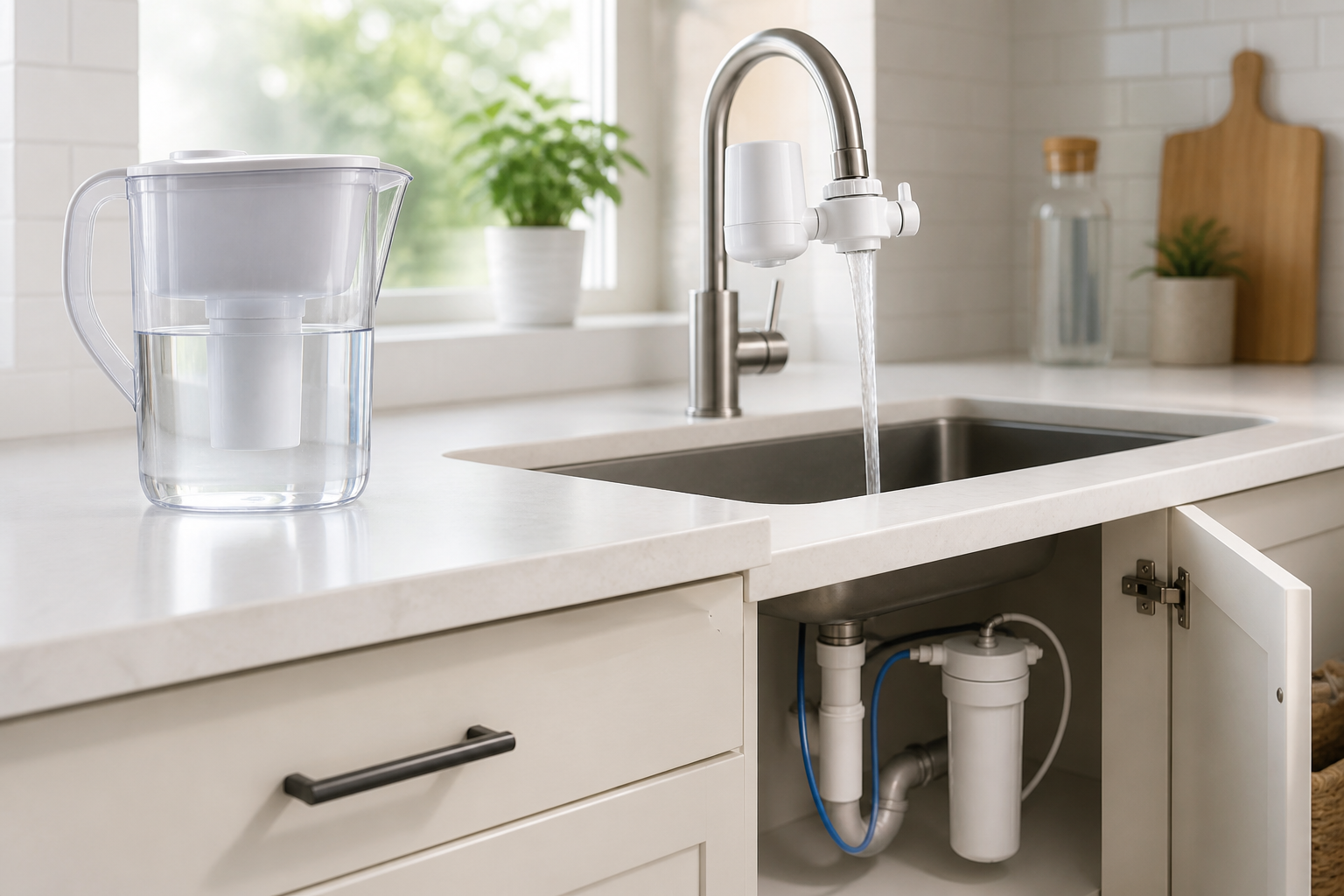
A pitcher filter usually wins on low-friction setup. A faucet filter can feel more convenient when refills start getting old. An under-sink system often makes the most sense when a household uses filtered water often enough that it wants the access to feel almost invisible day to day.
This article stays focused on format fit, not product picks. If you are already comparing specific models, use HealthGlean’s water-filter buyer guide. If you are still deciding which setup belongs in your kitchen at all, start here.
Pitcher vs Faucet vs Under-Sink: Quick Answer
Choose a pitcher filter first if you rent, want the easiest setup, or only need filtered water in smaller amounts. It is usually the lowest-friction place to start, especially in apartments or smaller kitchens.
Choose a faucet filter first if you want filtered water at the sink without remembering constant refills. It can feel like the middle ground between a pitcher and a more committed under-sink system.
Choose an under-sink filter first if your kitchen uses filtered water often for both drinking and cooking, and you want the cleanest daily-use experience. The tradeoff is that it usually asks for more setup commitment and more planning around replacements.
Many buyers make the wrong choice because they compare by product claims before they compare by routine. A setup that looks better on paper can still be the worse fit if it adds daily friction your household will not tolerate.
Water Filter Setup Comparison At A Glance
| Category | Pitcher filter | Faucet filter | Under-sink filter |
|---|---|---|---|
| Best for | Renters, small kitchens, lighter daily use | Readers who want faster sink access without a bigger install | Households that use filtered water often for drinking and cooking |
| Setup effort | Lowest | Usually low to moderate | Highest |
| Daily convenience | Lower if refills get annoying | Higher than a pitcher for quick fill access | Usually highest once installed |
| Counter or sink impact | Takes fridge or counter space | Lives on the faucet and changes sink feel | Keeps counters cleaner but uses under-sink space |
| Output volume | Best for smaller amounts | Moderate | Best for higher ongoing use |
| Replacement routine | Simple but easy to ignore | Usually straightforward | More involved, but often less visible day to day |
| Renter fit | Strong | Often good if sink hardware cooperates | Usually weaker unless installation is clearly allowed |
| Main tradeoff | Refills and slower access | Sink compatibility and faucet clutter | Setup commitment and replacement planning |
When A Pitcher Filter Fits Better
Pitcher filters make the most sense when simplicity matters more than volume. If you rent, move often, or just want to start somewhere without changing your sink setup, a pitcher is often the easiest entry point. That is why it can be a better fit for dorms, apartments, smaller kitchens, or households where only one or two people regularly reach for filtered water.
The main advantage is low setup friction. You buy it, rinse what needs rinsing, set it up, and start using it. There is no faucet attachment to worry about and no under-sink clearance question to solve. For readers who delay decisions because they do not want installation hassle, that can matter more than almost anything else.
The tradeoff is that daily convenience can drop fast if your household drinks a lot of water or also wants filtered water for cooking. Refilling, waiting, and making space in the fridge or on the counter can become the thing that turns a simple solution into an annoying one.
Pitchers fit best when you want a lower-commitment setup and your water use is modest enough that refills do not become a recurring frustration.
When A Faucet Filter Fits Better
Faucet filters usually appeal to readers who have outgrown the refill cycle of a pitcher but are not ready for under-sink installation. They can feel more natural in daily use because the water comes directly from the sink, which removes part of the friction that makes some people stop using pitchers consistently.
This format often fits small households that want quicker access without giving up the sink as a workspace entirely. It can also suit readers who mostly need filtered drinking water but do not want to wait on a pitcher every time they fill a bottle or glass.
The challenge is that faucet filters depend on sink compatibility and personal tolerance for visual clutter. Some readers dislike anything attached to the faucet. Others find the setup completely worth it once they stop thinking about refills.
A faucet filter is usually strongest as a middle-ground choice. It can feel more convenient than a pitcher without asking for the larger commitment of an under-sink setup.
When An Under-Sink Filter Fits Better
Under-sink filters make the most sense when a kitchen uses filtered water often enough that access needs to feel automatic. If the household regularly fills bottles, cooks with filtered water, or simply wants fewer visible filter pieces on the counter, under-sink can be the cleaner long-term fit.
The everyday advantage is convenience at volume. Once the setup is in place, the kitchen often feels less cluttered and the filtered-water habit becomes easier to maintain. That is the real appeal. It is not just about having a more built-in system. It is about removing repeated friction from a routine the household expects to keep using.
The tradeoff is commitment. Under-sink setups usually ask for more planning, more installation confidence, and more awareness of replacement timing. They are less forgiving if you are unsure about the sink space, rent your home, or simply do not want one more under-cabinet task to manage.
Readers who cook often or want filtered water to feel like a seamless part of the kitchen usually have the strongest case for under-sink. Readers who are still testing whether they even like filtered-water upkeep may want to start smaller.
Real-Life Kitchen Scenarios
Apartment or studio kitchen
A pitcher is usually the safest starting point when counter space is tight, installation freedom is limited, and the household wants minimal commitment.
Small household that hates constant refills
A faucet filter often makes more sense if the sink setup allows it. It can remove some of the daily annoyance that makes pitcher ownership fade after the first few weeks.
Family kitchen with heavier daily use
Under-sink tends to fit better when the kitchen wants filtered water available for repeated use throughout the day, including cooking as well as drinking.
Reader who wants cleaner counters
Under-sink usually wins if visible countertop or fridge storage clutter is part of the frustration. A faucet filter may still help, but it changes the sink experience more directly.
Reader who does not want installation hassles
Pitcher wins first. Faucet is second. Under-sink is usually last for this type of buyer, even if it looks like the most polished long-term setup.
Costs And Hassles Buyers Miss
Many readers compare water filters by starter price and stop there. That is usually the wrong place to stop. The more important question is whether the setup creates a routine your household will actually keep using.
Replacement timing matters because any filter is only as useful as the habit around maintaining it. Refill friction matters because that is what makes some pitcher buyers quietly stop using theirs. Sink compatibility matters because a faucet setup that technically works but feels awkward may not stay enjoyable. Daily use volume matters because a good low-volume solution can feel terrible once the household asks it to do more.
This is also where format-first thinking becomes helpful. Before you compare products in detail, compare the ongoing routine each format creates. Once that part is clear, the product-level decision gets easier.
If you are at that stage already, the next move is to use HealthGlean’s water-filter buyer guide for product-level comparisons within the setup type that now looks most realistic for your home.
What To Check Before Buying Any Setup
- Kitchen layout: Decide whether you have space for a pitcher, tolerance for a faucet attachment, or usable under-sink room.
- Renter limits: If you rent, make sure the setup fits what you can realistically install and remove later.
- Sink hardware: Faucet filters are only helpful when the sink setup actually cooperates.
- Refill tolerance: Be honest about whether repeated refills will become a daily annoyance.
- Filtered-water use: Drinking-only and drinking-plus-cooking are different use patterns and can justify different formats.
- Replacement habits: Pick a setup you are likely to maintain consistently, not just the one that looks best on day one.
When To Use The Product-Level Buyer Guide Instead
If you already know you want a pitcher, faucet filter, or under-sink system, this article has done its job. The next question is no longer about format fit. It is about which options within that format deserve a closer look.
That is when the HealthGlean water-filter buyer guide becomes the better next step. Use this page to narrow the setup. Use the buyer guide to narrow the product list.
FAQ
Is a pitcher filter enough for everyday drinking water?
It can be, especially for smaller households or readers who want the easiest setup. The limit is usually convenience at volume, not whether the format works at all.
Are faucet filters better than pitchers?
Not automatically. Faucet filters can feel more convenient because they reduce refill friction, but a pitcher may still fit better if the household rents, wants maximum simplicity, or dislikes altering the sink setup.
Is under-sink worth it for renters?
Sometimes, but it is often a weaker fit unless installation is clearly allowed and the reader expects to stay long enough for the setup to feel worthwhile.
Which setup is easiest to maintain?
Pitchers are usually easiest to start with. Faucet filters often stay simple if the sink hardware works well. Under-sink systems can be easy to live with once installed, but usually ask for more commitment up front.
Which filter type fits a small kitchen best?
That depends on where the friction shows up. A pitcher can fit a small kitchen well if refills stay manageable. A faucet filter can work better if counter or fridge space is tight and the sink setup cooperates.
Editorial note: This draft is designed as an informational support article. It contains no product picks, no affiliate links, and no product-rating claims.