Fitness Band vs Smartwatch for Sleep, Steps, and Everyday Wear
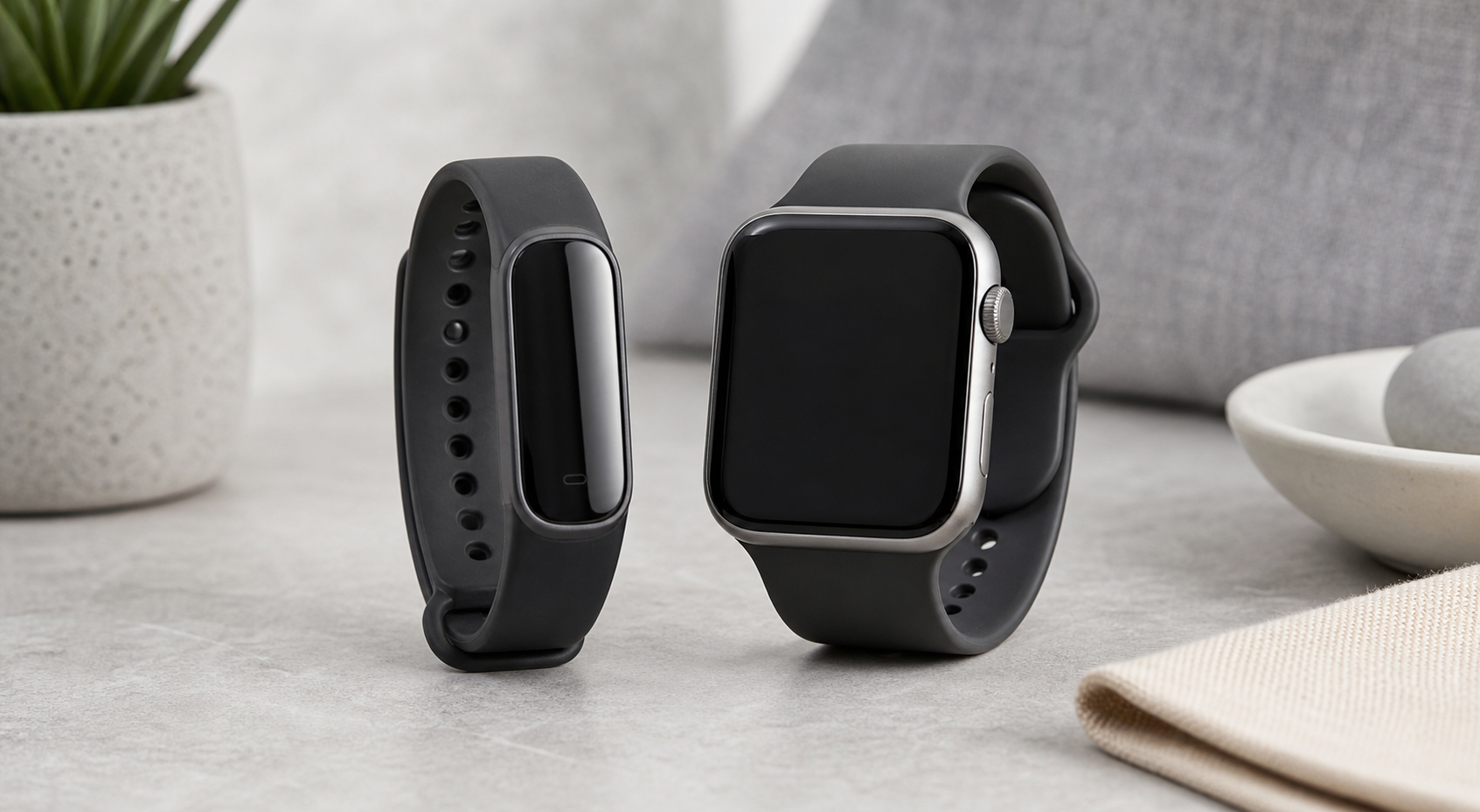
Some readers do not need the “best” tracker first. They need the right type of tracker. A fitness band and a smartwatch can both track steps and sleep, but they fit daily life differently. One is usually lighter, simpler, and easier to wear overnight. The other can do much more during the day, but it may ask for more charging, more attention, and more tolerance for wearing a larger device.
That difference matters more than many buyers expect. A feature-heavy watch can look better on paper and still be the worse fit if it feels bulky at night or spends too much time on a charger. A simple band can look limited and still be the better choice if the reader mainly wants sleep trends, step counts, and something that disappears on the wrist.
This article stays focused on format fit, not product picks. If you are already comparing specific models, use HealthGlean’s fitness-tracker buyer guide. If your real goal is sleep-first tracking rather than an all-day wearable, use HealthGlean’s sleep-tracker guide.
Use this page when format fit matters more than features on paper
This comparison is strongest when you are choosing between simpler overnight comfort, more daytime watch features, or a sleep-first tracker path.
Fitness Band vs Smartwatch: Quick Answer
Choose a fitness band first if you want lower-friction sleep and step tracking, lighter wrist feel, and better odds that you will keep the device on overnight. Bands often fit readers who want the tracker to stay simple.
Choose a smartwatch first if you want more daytime features, app support, notifications, and a device that acts like more than just a tracker. That can be useful, but only if you actually want those extra functions on your wrist.
Choose a sleep-first tracker instead if your main goal is overnight comfort and sleep insight rather than watch-style features. That is where the dedicated HealthGlean sleep-tracker guide can help more than either wearable format alone.
Which One Is Easier To Sleep In?
Fitness bands usually win on overnight comfort. They are often slimmer, lighter, and easier to forget once you are in bed. That matters because sleep tracking only works if the reader is willing to wear the device consistently enough for the data to become useful over time.
Smartwatches can still work overnight, but they are more likely to feel present. A larger case, brighter screen, or heavier band can make nighttime wear less natural for readers who are sensitive to anything on the wrist while sleeping.
This does not mean a smartwatch is bad for sleep tracking. It means comfort becomes part of the buying decision sooner. If a reader already knows they dislike sleeping in larger watches, a band is often the safer first move.
Battery Life And Charging Friction
Battery life is one of the clearest band-versus-watch differences. Fitness bands usually last longer between charges, which can make sleep tracking easier because the device is less likely to be off the wrist at the wrong time.
Smartwatches often need more frequent charging, especially when the screen, apps, notifications, and richer daytime features are used heavily. That does not automatically make them worse. It just means the buyer should be honest about charging habits. A device that needs more care than the reader will realistically give it can quietly become a worse sleep tracker.
Charging friction is one of the main reasons some people stop wearing a watch overnight even when they like the device overall. Bands often have an advantage here simply because they ask less from the routine.
Sleep And Step Tracking Tradeoffs
Both formats can cover the basics for sleep and steps. The more important difference is not whether one counts steps and the other does not. It is whether the extra layers of a smartwatch actually help the reader use the device more effectively or just make it feel heavier and busier.
A fitness band often gives enough data for readers who mainly want step totals, general sleep patterns, and simple trend tracking. A smartwatch may offer more context, more visual detail, and more daytime functions, but that does not always translate into better everyday use.
For many readers, “enough and consistent” is better than “more and annoying.” That is the real tradeoff. A simpler device that stays on the wrist often can be more useful than a smarter one that gets left on the charger or taken off at night.
Notifications, Apps, And Everyday Wear
Smartwatches usually pull ahead when the reader wants apps, message previews, call handling, navigation, or more screen-based features during the day. For some people, that turns the device into something much more useful than a basic tracker.
For other people, those same features create friction. More notifications can mean more buzzing, more screen checking, and more device maintenance. A fitness band can feel calmer because it keeps the wearable focused on tracking rather than turning it into another mini-screen.
The better choice depends on whether the reader wants a tracker that stays in the background or a watch that becomes part of the day-to-day device stack.
Comfort, Style, And Day-Night Switching
Comfort is not only about sleep. It also affects whether the tracker feels easy to wear all day, at work, during exercise, and again overnight. Fitness bands often disappear more easily into a routine. Smartwatches can feel more substantial and more polished, but they also ask for more wrist tolerance.
Some readers prefer the look and daytime usefulness of a smartwatch enough that the tradeoff is worth it. Others care more about a device that feels light enough to leave on all the time. That difference matters because consistency is one of the biggest predictors of whether tracking stays useful.
When A Smartwatch Is Too Much
A smartwatch may be too much if the reader mostly wants steps, sleep trends, and a device that asks very little in return. It may also be the wrong fit for readers who dislike frequent charging, feel distracted by notifications, or already know they do not want to sleep in a larger watch case.
In those cases, a fitness band often solves the real problem better. The band is not “more advanced,” but it may be more realistic for the routine.
When A Band Is Too Limited
A fitness band may feel too limited when the reader wants the wearable to do much more during the day. If the person expects apps, a larger display, richer notification handling, or deeper smartwatch ecosystem features, a band can start to feel like the wrong category quickly.
This is especially true for buyers who already use a smartwatch ecosystem and want the tracker to fit into that broader device setup. In that case, a smartwatch can make more sense even if it is less comfortable overnight.
What To Check Before Buying Either
- Phone compatibility: Make sure the device fits the phone and app ecosystem you actually use.
- Charging tolerance: Be honest about whether you will keep up with frequent charging.
- Overnight comfort: If sleep tracking matters, comfort matters more than feature lists suggest.
- Notification habits: Decide whether you want more wrist alerts or less.
- Daytime feature needs: Separate “nice to have” from features you would truly use every day.
When To Use The Buyer Guides Instead
If you already know you want a fitness band or a smartwatch, this article has done its job. The next step is not another format comparison. It is choosing the right model inside the format that now fits your routine better.
Use HealthGlean’s fitness-tracker buyer guide for product-level comparisons. If sleep tracking matters more than broader watch features, use the sleep-tracker guide instead.
FAQ
Is a fitness band better than a smartwatch for sleep tracking?
It often can be if the main issue is comfort and consistency. Bands are usually easier to wear overnight, which can matter more than extra smartwatch features.
Do smartwatches need charging too often for sleep tracking?
Some do for some users. The bigger issue is whether the charging routine interrupts overnight wear often enough to make tracking less useful.
Are fitness bands accurate enough for steps and sleep?
For many readers, yes, especially if the goal is trend tracking and general daily-use insight rather than medical-grade measurement.
Should I wear a smartwatch to bed?
Only if it feels comfortable enough that you will do it consistently. If the watch feels bulky or irritating at night, the best features may not matter much.
When does a sleep-first tracker make more sense?
When overnight comfort and sleep-focused tracking matter more than daytime smartwatch features. That is usually the point where a dedicated sleep-tracker comparison becomes more useful.
Editorial note: This draft is designed as an informational support article. It contains no product picks, no affiliate links, and no product-rating claims.