Affiliate disclosure: This guide contains affiliate links. If you buy through these links, HealthGlean may earn a commission at no extra cost to you. We separate product research from monetization and recommend that you verify current specifications before buying.
Updated: May 5, 2026.
HealthGlean buying guide standards
How This Guide Was Reviewed
Written byHealthGlean Editorial Team
Editorial reviewBuying criteria, disclosure, and safety framing review
Standards reviewMay 9, 2026
Reviewer statusEditorial and safety/claims review; not medical review
For this Best Exercise Bikes for Low-Impact Cardio at Home guide, we prioritize clear product fit, practical safety notes, official specifications, seller and manufacturer references, price and availability checks, and cautious health language. Affiliate links may earn HealthGlean a commission, but they do not change the criteria we use to compare products.
Credentialed review boundary: We name a qualified reviewer only when a real clinician or specialist has reviewed that specific guide and the review scope can be described accurately. Until then, this guide should be read as general wellness and shopping information, not medical advice.
- We favor products with clear use cases, transparent specifications, realistic limitations, and buyer-friendly return or warranty signals.
- We avoid treating consumer wellness products as diagnosis, treatment, cure, prevention, or emergency guidance.
- We ask readers to verify current price, seller, model, warranty, warnings, materials, ingredients, and compatibility before buying.
Read more about the HealthGlean Editorial Team, plus our Editorial Policy, Product Review Methodology, Affiliate Disclosure, and Medical Disclaimer.
An exercise bike can be a practical way to add low-impact cardio at home, especially if walking outdoors, running, or crowded gyms are not realistic. But “low impact” does not mean “no risk.” The wrong bike fit, too much resistance, loose pedal straps, poor floor setup, or pushing through warning symptoms can make a simple ride uncomfortable or unsafe.
This guide focuses on home exercise bikes with direct product links, realistic fit notes, safety cautions, and sources. It does not treat exercise bikes as medical devices or promise weight loss, rehabilitation, pain relief, heart-health outcomes, or disease prevention.
Quick Picks
| Pick | Best For | Why It Stands Out | Check Price |
|---|---|---|---|
| Schwinn IC4 Indoor Cycling Bike | Best connected indoor cycling bike | 100 magnetic resistance levels, Bluetooth heart-rate armband, dual-sided SPD/toe-cage pedals, app compatibility, 5 ft 1 in to 6 ft 4 in rider range, and 330 lb max user weight. | Check Schwinn IC4 price |
| Sunny Health & Fitness SF-B1002 | Best simple belt-drive spin bike | 49 lb flywheel, belt drive, adjustable seat and handlebars, micro-adjustable leather-pad resistance, transport wheels, and no required app subscription. | Check Sunny SF-B1002 price |
| JOROTO X2 Magnetic Indoor Cycling Bike | Best quiet magnetic value bike | 35 lb flywheel, belt drive, non-contact magnetic resistance, four-way seat and handlebar adjustment, emergency-stop knob, caged pedals, and transport wheels. | Check JOROTO X2 price |
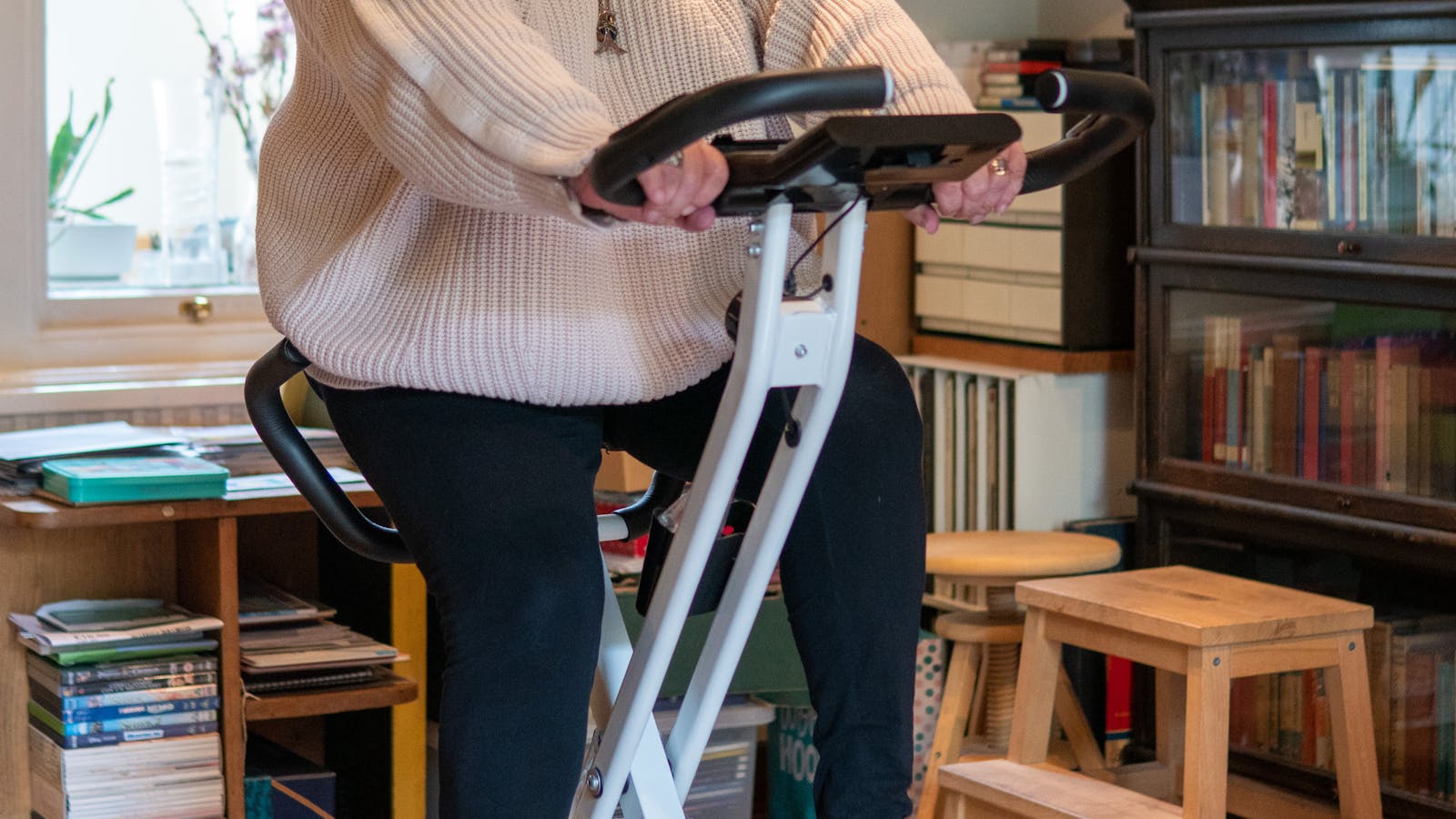
| Exerpeutic 1200 Folding Magnetic Upright Bike | Best folding upright bike for small spaces | Foldable frame, magnetic tension knob, pulse sensors, large padded seat, simple LCD console, adjustable seat height, and 300 lb manual-listed max user weight. | Check Exerpeutic 1200 price |
| Marcy ME-709 Recumbent Exercise Bike | Best budget recumbent bike | Step-through recumbent frame, eight magnetic resistance levels, adjustable padded seat and backrest, LCD display, transport wheels, pedal straps, and 300 lb max user weight. | Check Marcy ME-709 price |
Who This Guide Is For
This guide is for adults choosing an exercise bike for home cardio, small-space fitness, apartment routines, beginner conditioning, low-impact movement, or steady indoor cycling. It compares connected indoor cycling bikes, simple spin-style bikes, magnetic value bikes, folding upright bikes, and recumbent bikes.
It is not a medical exercise plan. If you have chest pain, unexplained shortness of breath, dizziness, fainting, uncontrolled blood pressure, recent surgery, pregnancy-related restrictions, balance problems, severe joint pain, neuropathy, or a heart, lung, bone, nerve, or metabolic condition, ask a qualified clinician before starting or changing exercise.
Low-Impact And Heart-Safety Notes
CDC guidance says adults need at least 150 minutes of moderate-intensity aerobic activity each week, plus muscle-strengthening activity on 2 or more days. A stationary bike can help with the aerobic part, but you still need to match intensity to your current fitness and health status. Start easier than you think, especially if you have been inactive.
The American Heart Association describes exercise stress testing as a way clinicians can help determine a safe level of exercise when symptoms or heart-risk questions are present. At home, you do not have a clinical team watching your heart rate, rhythm, blood pressure, breathing, and fatigue. Do not use a consumer bike display, heart-rate grip, watch, or app as a medical monitor.
- Stop immediately: stop riding and seek medical guidance if you feel chest pain, pressure, faintness, severe shortness of breath, unusual heart symptoms, new weakness, or pain that feels wrong.
- Warm up and cool down: begin with low resistance for several minutes and finish the same way.
- Use the talk test: for moderate effort, you should generally be able to talk in short sentences, not gasp.
- Avoid sudden jumps: increase time, cadence, or resistance gradually, not all at once.
- Do not stand sprint by default: only stand if the bike is designed for it, properly adjusted, and stable under you.
Fit, Setup, And Stability Notes
Bike fit matters. A saddle that is too low can overload knees, while one that is too high can cause hip rocking and poor control. A reach that is too long can bother the neck, shoulders, hands, or lower back. Before you buy, compare your height, inseam, weight, and available space against the exact listing and manual.
Place the bike on a flat, stable surface with enough clearance around it. Use a dense equipment mat on hard floors, keep cords away from pedals, and keep children and pets away from moving pedals, flywheels, resistance knobs, and loose dumbbells.
- Seat height: set the seat so your knee stays slightly bent at the bottom of the pedal stroke.
- Pedal straps: tighten straps enough to prevent slipping, but not so tight that your feet feel trapped.
- Weight capacity: stay below the listed limit and remember that standing or rocking can stress a frame more than seated pedaling.
- Noise: magnetic resistance is usually quieter and lower maintenance than friction pads; belt drive is usually quieter than chain drive.
- Storage: folding bikes save space, but larger non-folding frames usually feel steadier during harder rides.
Resistance, Metrics, And App-Claim Notes
Resistance systems are not directly comparable across brands. “100 levels” on one bike is not the same as another bike with a 0-100 knob or eight magnetic levels. Flywheel weight can affect ride feel, but it does not automatically make a bike safer, better, or more effective. Fit, stability, resistance control, and consistency matter more than one headline number.
Bike consoles and app integrations are useful for motivation, but distance, calories, speed, and power estimates on home exercise bikes can vary widely. Use them as trend tools on the same bike, not as medical data or precise outdoor cycling equivalents.
- Magnetic resistance: usually quieter and lower maintenance because the resistance system does not need a pad pressing directly on the flywheel.
- Friction resistance: can feel strong and simple, but pads can wear and may be louder.
- Recumbent bikes: offer back support and easier mounting for some users, but they are still exercise equipment and still require careful fit.
- Connected bikes: check whether the app requires a subscription and whether your phone, tablet, watch, or cycling app is actually supported.
- Heart-rate grips: useful for rough feedback, but not a substitute for medical monitoring.
How We Chose
- We used direct Amazon product links instead of generic search-result pages.
- We checked official product pages, owner manuals, public safety references, and adult physical activity guidance for fit, resistance, weight capacity, storage, and safety notes.
- We included multiple bike styles because a spin bike, folding upright, and recumbent bike solve different home-cardio problems.
- We favored products with clear specifications, practical adjustability, and realistic use-case fit.
- We avoided unsupported claims about fat loss, pain relief, rehabilitation, heart treatment, or medical outcomes.
Product Notes
Schwinn IC4 Indoor Cycling Bike
The Schwinn IC4 is the connected-bike pick for readers who want a quiet indoor cycling setup without buying a bike with a built-in subscription screen. Schwinn lists 100 magnetic resistance levels, Peloton, Zwift, and JRNY app compatibility, a backlit metric console, dual-sided SPD and toe-cage pedals, a Bluetooth heart-rate armband, and a 330 lb maximum user weight. It is more expensive than simple friction bikes and still needs careful setup, but it is the strongest fit if you want app-friendly cycling and a sturdier specification sheet.
- Pros: quiet magnetic resistance; 100 resistance levels; dual-sided pedals; broad rider-height range; 330 lb listed max user weight.
- Cons: premium price; apps or subscriptions may cost extra; no built-in touchscreen; heavy to move; requires an outlet.
- Best fit: Choose this if you want a quiet, app-ready spin-style bike and are willing to pay more for adjustability and connectivity.
Sunny Health & Fitness SF-B1002
The Sunny SF-B1002 is the simple spin-bike pick for readers who want a heavy-flywheel ride and no required app ecosystem. Sunny lists a 49 lb flywheel, belt drive, adjustable seat and handlebars, micro-adjustable leather-pad friction resistance, bottle holder, and transport wheels. It is less tech-forward than the Schwinn IC4 and friction resistance can require more maintenance than magnetic resistance, but it is a practical choice if you want a straightforward indoor cycling bike.
- Pros: heavy 49 lb flywheel; belt drive; simple no-screen design; adjustable fit; transport wheels.
- Cons: friction pad can wear; less quiet than magnetic resistance; no advanced console; limited connected-training features; fit range is narrower than some premium bikes.
- Best fit: Choose this if you want a classic indoor cycling feel without smart-bike complexity.
JOROTO X2 Magnetic Indoor Cycling Bike
The JOROTO X2 is the quiet magnetic value pick. JOROTO lists a 35 lb flywheel, non-contact magnetic resistance, belt drive, four-way adjustable seat and handlebars, emergency-stop knob, performance monitor, caged pedals, and transport wheels. The official page has different capacity figures in different sections, so verify the exact listing and manual before buying. It is a good fit for readers who want magnetic resistance at a lower price, but not the best fit for heavy connected training data.
- Pros: magnetic resistance; belt drive; four-way adjustability; emergency-stop knob; useful tablet and bottle storage.
- Cons: capacity language varies by listing; basic monitor; not as polished as premium connected bikes; Amazon seller details should be checked carefully; not foldable.
- Best fit: Choose this if quiet magnetic resistance matters more than built-in classes or advanced metrics.
Exerpeutic 1200 Folding Magnetic Upright Bike
The Exerpeutic 1200 is the small-space folding pick for light to moderate rides. The owner manual lists a 300 lb maximum weight capacity, household-use warnings, a flat-surface setup requirement, one-person use, warmup guidance, and stop-exercise warnings for chest pain, nausea, dizziness, or shortness of breath. It folds more easily than spin bikes and has a large seat, but the resistance and riding position are not built for intense studio-style cycling.
- Pros: folds for storage; simple magnetic resistance; large padded seat; pulse sensors; 300 lb listed max user weight.
- Cons: not for hard sprint workouts; basic console; not as stable as larger non-folding bikes; shorter riders and taller riders should verify fit; household use only.
- Best fit: Choose this if storage space is the main constraint and your rides are easy to moderate.
Marcy ME-709 Recumbent Exercise Bike
The Marcy ME-709 is the budget recumbent pick for readers who prefer a more supported seated position. Marcy lists smooth magnetic resistance, eight resistance levels, an adjustable high-density foam seat, backrest, step-through frame, LCD metrics, transport wheels, counter-balanced pedals with straps, 58 x 20 x 38 inch assembled dimensions, and a 300 lb maximum user weight. It is not compact and it is not a high-intensity spin bike, but it is the most accessible style in this guide for easy steady cardio.
- Pros: step-through recumbent frame; back support; eight magnetic resistance levels; 300 lb listed max user weight; pedal straps.
- Cons: large footprint; basic display; limited resistance range; not for standing cycling; seat fit still needs to be checked.
- Best fit: Choose this if you want seated back support and steady low-impact pedaling rather than spin-style classes.
Which Exercise Bike Type Should You Buy?
- Indoor cycling bike: best for spin-style workouts, stronger resistance, and out-of-saddle riding if the bike supports it.
- Magnetic value bike: best if quiet operation matters and you do not need a premium app ecosystem.
- Friction-resistance bike: best if you want a simple heavy-flywheel feel and accept pad maintenance.
- Folding upright bike: best for small spaces, easy rides, and storage, not intense sprint training.
- Recumbent bike: best if you prefer a supported seat and step-through access for steady seated cardio.
Before You Buy
- Confirm exact ASIN, seller, model name, return policy, warranty, included accessories, and whether the product is new or used.
- Compare user height, inseam, maximum user weight, ceiling height, and floor footprint against the exact listing.
- Check whether the bike needs power, batteries, an app, a subscription, or a separate tablet.
- Read the manual for setup, pedal installation, maintenance, warnings, and emergency-stop instructions.
- Budget for an equipment mat if you have hardwood, tile, apartment flooring, or downstairs neighbors.
- Avoid buying a bike only because it has a heavy flywheel, high max resistance, or impressive app screenshots.
- Choose a bike you can mount, adjust, pedal, stop, and move safely in your actual room.
FAQ
Are exercise bikes really low impact?
They are generally lower impact than running because your feet stay on the pedals, but they can still stress knees, hips, back, neck, hands, and cardiovascular system if fit, resistance, or intensity is wrong.
Is a recumbent bike safer than an upright bike?
A recumbent bike can feel more supported and easier to mount for some people, but it is not automatically safer for everyone. Check fit, resistance, stability, and your health situation before assuming it is the right choice.
What is better: magnetic or friction resistance?
Magnetic resistance is usually quieter and lower maintenance. Friction resistance can be simple and strong, but pads can wear and may make more noise. Neither type is automatically better for every rider.
How long should beginners ride?
Start with short, easy sessions that leave you feeling in control. Many beginners do better with 5 to 15 minutes at low resistance, then gradually adding time before adding harder resistance. Ask a clinician if you have medical risk factors or symptoms.
Can I use an exercise bike while watching TV or working?
You can, but keep posture, cadence, and control in mind. Do not let distraction make you ignore warning symptoms, loose straps, an unstable frame, or poor posture.
Exercise Bike Buying Basics
Before choosing an exercise bike, use these HealthGlean explainers to compare bike styles, decode resistance and noise claims, and set up safer repeatable rides:
- upright vs recumbent vs indoor cycling bikes – Compare bike styles by posture, mounting, workout feel, space, app needs, and who should be cautious before choosing.
- exercise bike resistance, drive, and noise – Understand magnetic vs friction resistance, belt vs chain drive, flywheel claims, console metrics, and apartment noise tradeoffs.
- exercise bike fit, safety, and maintenance – Set saddle height, check straps and stability, warm up, watch warning symptoms, and keep the bike maintained for repeatable rides.
Next HealthGlean Guides
Use these related HealthGlean guides to keep building the same sleep, home-wellness, and fitness setup:
- quiet bedroom air purifier picks – compare quiet CADR-focused machines for cleaner bedroom air.
- white noise machines for bedrooms and home offices – choose a sound machine for sleep, focus, or shared spaces.
- sunrise alarm clocks for gentler mornings – build a calmer wake-up routine with light, sound, and backup alarms.
- water filters for healthier home drinking water – match pitchers and under-sink filters to your water-quality needs.
- non-toxic cookware sets for everyday healthy cooking – compare ceramic nonstick, stainless steel, and cast iron choices.
- mattress toppers for back support and pressure relief – compare topper materials, firmness, and comfort tradeoffs before replacing a mattress.
- humidifiers for dry bedrooms and better comfort – choose a bedroom humidifier with the right humidity and cleaning habits.
- HEPA vacuums for dust, pet hair, and cleaner indoor air – compare sealed filtration, bagged disposal, pet-hair tools, and allergy-aware cleaning habits.
- weighted blankets for calm comfort and better sleep – choose a safe weight, breathable material, and washable design for your bedtime routine.
- cooling pillows for hot sleepers – match cooling materials, loft, and neck support before replacing your pillow.
- walking pads for home offices and small spaces – compare desk safety, noise, speed, deck size, and weight-capacity tradeoffs.
- adjustable dumbbells for compact home gyms – compare loading ranges, adjustment mechanisms, floor safety, storage, and recall-aware buying notes.
- resistance bands for beginner home workouts – compare tube bands, loop bands, pull-up bands, anchor safety, latex notes, and beginner loading.
- exercise mats for home workouts – compare grip, thickness, materials, odor claims, floor safety, storage, and workout fit.
- rowing machines for full-body home workouts – compare air, magnetic, connected, and budget rowers with technique and recall-aware buying notes.
- meal prep containers for healthy weekly eating – compare glass, plastic, divided lunch boxes, and freezer trays with food-safety notes.
- massage guns for post-workout recovery – compare gentle, premium, serious-recovery, budget, and compact options with safety cautions.
- fitness trackers for sleep, steps, and everyday wellness – compare Fitbit, Apple, Garmin, and Amazfit picks with sleep, privacy, battery, and compatibility notes.
- red light therapy devices for home wellness routines – compare panels, masks, wands, and belts with FDA-clearance, eye-safety, and overuse cautions.
- sauna blankets for home recovery routines – compare heat ranges, timers, voltage, hydration, burn risk, and recall-aware buying notes.
Browse all HealthGlean buying guides.
Sources And Product References
We checked official product pages, owner manuals, public safety references, and adult physical activity guidance on May 5, 2026. Product prices, seller availability, model revisions, app compatibility, user-height ranges, weight limits, warranty terms, and included accessories can change, so verify the exact listing before buying.
- Schwinn IC4 official product page
- Sunny Health & Fitness SF-B1002 official product page
- JOROTO X2 official product page
- Exerpeutic 1200 Folding Upright Bike owner manual
- Marcy ME-709 official product page
- CDC adult physical activity guidelines
- American Heart Association exercise stress test overview
- Mayo Clinic starting or restarting exercise program guidance
Medical disclaimer: This article is for informational purposes only and is not medical advice. Exercise bikes may support physical activity for some people, but they do not diagnose, treat, cure, or prevent disease.