Why Stainless Steel Pans Stick and How to Prevent It
Many readers buy stainless steel cookware because it looks durable, versatile, and like the kind of pan they can keep for years. Then the first frustrating meal happens. Eggs glue themselves to the surface, chicken tears when it is flipped, or a quick weeknight dinner turns into a cleanup project. That makes some buyers assume the pan is bad when the bigger issue is often how stainless steel behaves compared with lower-friction cookware.
Stainless steel usually asks for more technique than many people expect at first. Heat timing, oil timing, surface moisture, crowding, and patience all matter more than they do in a pan designed to feel easier right away. That does not mean stainless steel is the wrong choice. It means the buyer should understand why sticking happens before deciding whether the pan or the material is the real problem.
This article stays focused on that troubleshooting question only. If you are comparing broader cookware materials, use HealthGlean’s ceramic vs stainless steel vs cast iron guide. If you are comparing full cookware sets, use the HealthGlean cookware buyer guide. If you may really want a lower-friction surface instead of learning stainless steel technique, the nonstick replacement guide can help frame that decision too.
Next: compare cookware options before you buy. See the HealthGlean cookware buying guide to compare ceramic, stainless steel, and cast iron cookware options by upkeep, durability, and everyday fit.
What this page helps you decide
Use this page when food keeps sticking and you need to decide whether to change technique, switch materials, or compare other cookware options before buying again.
Why Stainless Steel Pans Stick: Quick Answer
Stainless steel usually sticks more when the pan is not properly preheated, the oil or food goes in at the wrong moment, or the food surface is wetter than the cook realizes.
Sticking also gets worse when the pan is crowded, the food is moved too early, or old residue from prior cooks changes how the surface behaves.
The fix is not always to abandon stainless steel. Often it is about improving the routine. But if the reader wants lower-friction daily cooking more than browning power or long-term durability, stainless steel may not be the best first-fit material for the kitchen.
Why Sticking Happens In The First Place
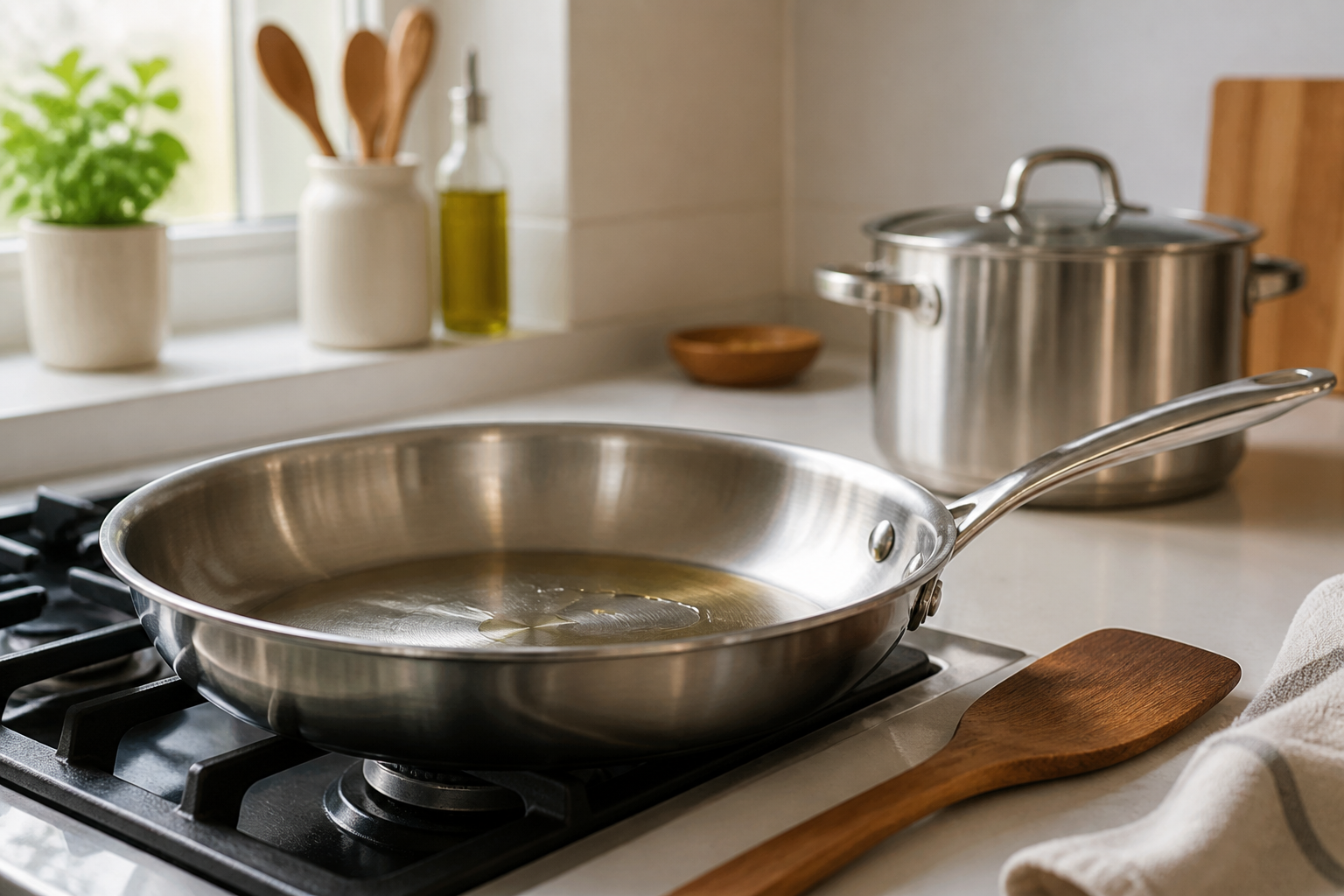
Stainless steel is not built to behave like a nonstick surface. It is designed for durability, browning, sauces, and longer-term versatility. That means the cooking experience depends more on how the pan is heated and how the food meets the surface.
When the timing is off, the food bonds more aggressively to the pan. That is why buyers can have two totally different experiences with the same cookware. One cook sees good browning and cleaner release. Another sees sticking and assumes the pan is impossible. The difference is usually the routine, not the metal alone.
Preheating Mistakes That Start The Problem
Preheating is one of the biggest sticking variables. A pan that is still too cool when food hits it often grabs harder. A pan that is driven too hot can also create problems by scorching oil or making the whole cook feel rushed.
The middle ground matters more than many beginners expect. Stainless steel often works better when the pan has time to warm evenly instead of being blasted fast and used immediately. If a cook is always moving from cold pan to food in a hurry, sticking is much more likely.
This is one reason stainless steel can feel harder than ceramic or other lower-friction surfaces for readers who mostly cook fast weeknight meals without wanting to think much about pan prep.
Oil And Food Timing Mistakes
Oil timing matters because it changes how the food meets the surface. If oil goes into a pan that is not behaving the way the cook expects, or if the food goes in at the wrong moment, sticking often follows. Readers who treat stainless steel like a pan that can absorb sloppy timing usually end up frustrated.
The same problem shows up when too little oil is used for the type of food being cooked or when the cook keeps second-guessing the timing and moving too quickly. Stainless steel tends to reward consistency more than improvisation, especially early on.
Moisture And Cold-Food Mistakes
Extra surface moisture can quietly ruin the cook before technique has a chance to work. Wet proteins, damp vegetables, or ingredients pulled straight from cold storage without any prep attention often make the pan feel much stickier than expected.
The issue is not that food can never be cold. It is that visible moisture and abrupt temperature contrast can make sticking more aggressive. Readers who want stainless steel to feel easier usually need to pay closer attention to drying surfaces and cooking in a less rushed way.
Crowding And Early-Movement Mistakes
Crowding makes stainless steel feel worse because it changes how heat moves across the pan and how moisture accumulates around the food. A pan that might release better with fewer pieces can turn into a sticky mess when too much is packed in at once.
Moving food too early is another common problem. Some cooks assume the moment food touches the pan it should slide easily. Stainless steel often asks for more patience. If the cook tries to force release too early, the pan seems like the problem even when timing is the bigger issue.
Cleanup Habits That Affect The Next Cook
What happens after the meal can shape the next one more than many readers realize. Burned-on oil, uneven residue, and shortcuts in cleanup can leave the surface feeling less predictable next time. Then the cook blames today’s meal when part of the problem came from yesterday’s cleanup.
This does not mean stainless steel is fragile. It means a dirty or partially scorched surface changes how the next cook starts. If the reader keeps getting inconsistent results, cleanup habits belong in the troubleshooting checklist too.
Foods That Are Less Forgiving In Stainless Steel
Some foods make technique mistakes feel bigger. Eggs, delicate fish, sugary marinades, and foods with wetter surfaces often expose weak timing faster than sturdier ingredients do. That does not mean stainless steel cannot cook them. It means the learning curve is more obvious with these foods.
That is why some readers conclude they hate stainless steel when what they really hate is learning stainless steel with the least forgiving foods first. If the kitchen mainly cooks delicate items and wants lower-friction cleanup, the material fit question becomes more important.
When Stainless Steel Is Working Normally
Stainless steel often performs best when the cook values browning, fond for sauces, and a surface that can handle regular use for a long time. A little initial sticking that later releases more cleanly is not automatically a sign of failure. It can be part of how the pan behaves when used well.
That perspective matters because some frustration comes from expecting stainless steel to feel like nonstick while also wanting stainless steel’s strengths. The pan may be doing what it is built to do even if it is not the easiest surface for every meal.
When Stainless Steel May Not Be Your Best Fit
Sometimes the honest answer is not more technique. It is a different material. If the reader mainly wants lower-friction eggs, easier cleanup, and less routine sensitivity, stainless steel may not be the best everyday first pan. That does not make it bad cookware. It means it may be the wrong fit for the cooking style.
If that sounds familiar, use HealthGlean’s broader cookware comparison and the main cookware buyer guide to compare materials by routine, not just by reputation. If your concern starts with nonstick wear and replacement timing, the nonstick replacement page is a useful bridge as well.
Readers who are worried about cookware labels more generally can also use the HealthGlean PFAS cookware guide for broader context without turning this page into a safety-claim argument.
Quick Checklist Before Blaming The Pan
- Preheat pace: Did you give the pan enough time to warm evenly instead of rushing from cold to cooking?
- Oil timing: Did the oil and food go in at a predictable point, or was the process rushed?
- Food surface moisture: Was the ingredient wetter than you realized?
- Pan crowding: Did too much food hit the pan at once?
- Early movement: Did you try to flip or move the food before it was ready to release?
- Cleanup carryover: Was old residue affecting the surface from the start?
- Material fit: Do you actually want stainless steel’s strengths, or do you want an easier daily surface?
If sticking keeps making weeknight cooking feel like work, use the HealthGlean cookware buying guide to compare ceramic, stainless steel, and cast iron options before you buy another pan.
FAQ
Does stainless steel always stick?
No. It usually feels more technique-sensitive than nonstick, but good preheating, better timing, and realistic food choices can improve release a lot.
Should I use high heat to stop sticking?
Not automatically. Higher heat can create a different problem if it makes the pan or oil behave too aggressively. Consistent preheating matters more than just turning the burner up.
Why do eggs stick so much in stainless steel?
Eggs are one of the less forgiving foods for stainless steel. They expose heat, oil, and timing mistakes faster than sturdier ingredients do.
Does using more oil fix the problem?
Not by itself. Oil matters, but it works together with pan temperature, moisture control, and patience. More oil does not automatically fix a rushed routine.
When is stainless steel the wrong fit for me?
If you mainly want low-friction everyday cooking and do not want to think much about technique, another material or a mixed-material kitchen may fit better.
Editorial note: This draft is designed as an informational support article. It contains no product picks, no affiliate links, and no product-rating claims.