Quiet Air Purifier for Bedroom Buying Checklist
A quiet air purifier for a bedroom should be chosen differently than a living-room purifier. The best fit is not just the smallest machine or the one with the longest feature list. Start with room size, CADR, low-speed noise, filter cost, light controls, and whether any ionizer feature can be turned off.
This checklist is practical pre-buying education, not medical advice. It should not be used for allergies, asthma, sleep problems, or any medical condition. If you need medical or indoor-air safety guidance for a health condition, ask a qualified professional.
Quick Answer
For most small bedrooms, compare air purifiers by the room’s square footage, smoke CADR, low-speed noise, filter replacement cost, HEPA wording, and nighttime usability. If you want product picks after checking those basics, use the HealthGlean small-bedroom air purifier buyer guide.
Bedroom Air Purifier Decision Framework
| Decision point | What to check | Why it matters at night |
|---|---|---|
| Room size | Measure or estimate square footage before comparing models. | A small purifier may sound quiet because it is undersized, while an oversized unit may run more comfortably on low. |
| CADR | Use a CADR room-size guide instead of relying only on broad room labels. | CADR gives a more useful comparison point for airborne particle filtration capacity. |
| Low-speed noise | Look for low or sleep-mode noise, not only maximum fan noise. | The fan speed you can tolerate overnight is the speed that matters most. |
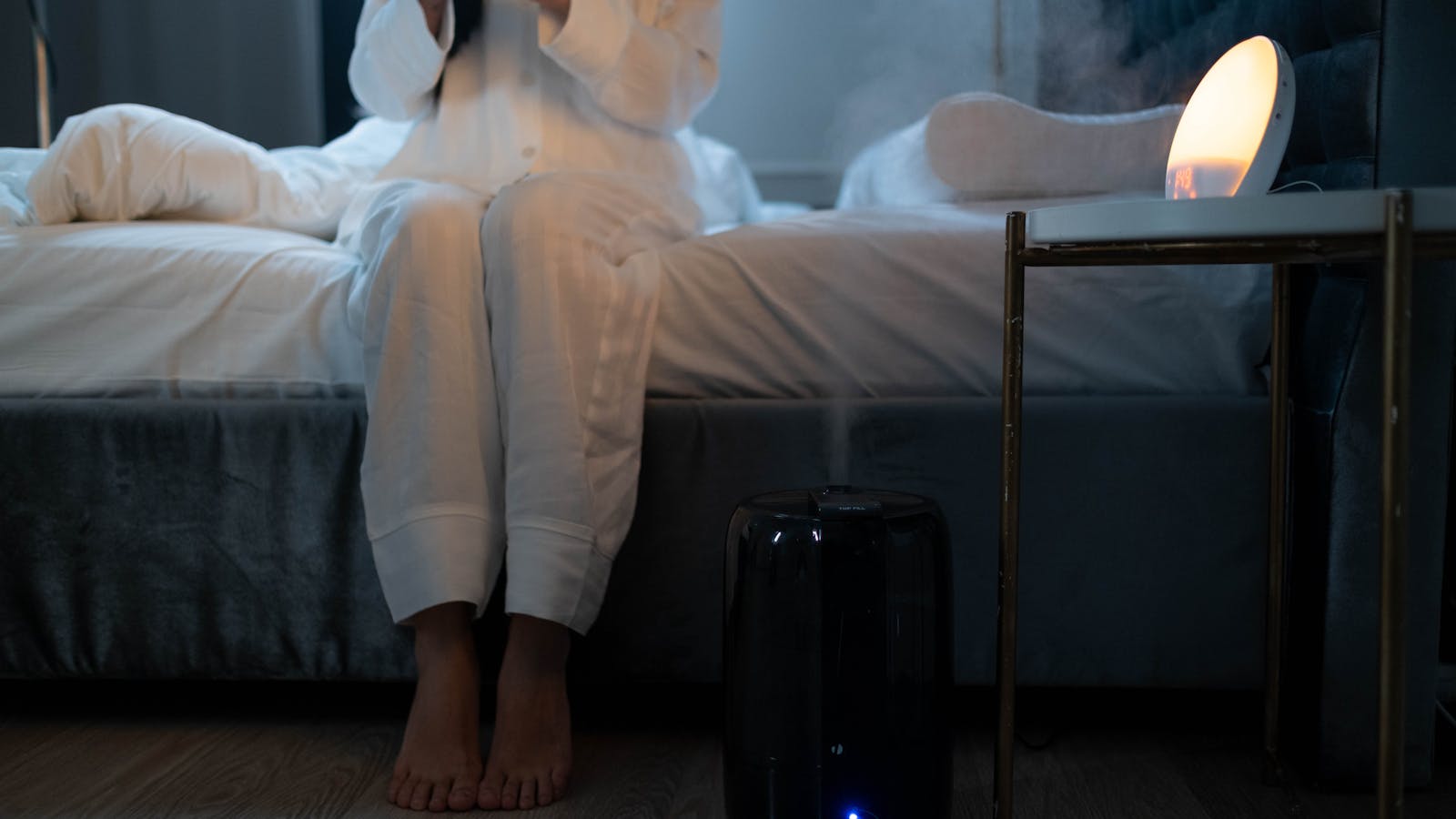
| Lights and controls | Check whether displays, air-quality indicators, and buttons can dim or turn off. | Bright lights can make a good purifier frustrating on a nightstand or dresser. |
| Filter ownership cost | Compare filter price, replacement timing, and availability. | A low device price can become expensive if filters are costly or hard to find. |
| Ionizer settings | Check whether ionizer, plasma, or similar features can be disabled. | Some shoppers prefer straightforward mechanical filtration for bedroom use. |
Bedroom Buying Checklist
- Measure the room or estimate square footage before shopping.
- Check smoke CADR or equivalent particle-filtration capacity.
- Compare the purifier at the fan speed you would actually use while sleeping.
- Confirm the display and indicator lights can be dimmed or turned off.
- Read the filter replacement interval and calculate one year of filter cost.
- Compare HEPA, HEPA-type, and ionizer wording before assuming marketing terms are equal.
- Check whether the unit needs clearance on all sides for airflow.
- Confirm replacement filters are available from the brand or trusted retailers.
- Review return policy and warranty before checkout.
- Avoid products that promise certain health outcomes or use fear-based claims.
How Quiet Is Quiet Enough?
Noise tolerance is personal, so a single decibel number cannot decide the purchase for everyone. The safer comparison is relative: look at the lowest usable fan speed, whether sleep mode reduces airflow too much for the room, and whether the purifier has a smooth fan sound instead of rattling, clicking, or abrupt speed changes.
If a bedroom purifier must run close to the bed, a slightly larger unit on low can be easier to live with than a very small purifier that needs a louder setting. If the unit will sit across the room, check airflow direction and whether furniture blocks the intake or outlet.
Common Mistakes
- Buying by room-size label alone: room labels can be based on different assumptions, so check CADR too.
- Ignoring replacement filters: a purifier is only useful if you can maintain it on schedule.
- Choosing too small: undersized units may need a higher and louder speed to keep up.
- Overvaluing app features: smart controls are convenient, but room fit, filter cost, and quiet operation matter more.
- Missing light controls: bright indicator lights can be more annoying in a bedroom than in a living room.
- Reading purifier claims as medical claims: a purifier is a home product, not medical guidance.
When To Use The Main Buyer Guide
Use this checklist first if you are still deciding what matters. Once you know your room size, noise tolerance, filter budget, and feature preferences, compare specific options in the best air purifiers for small bedrooms guide.
The buyer guide may include affiliate links. HealthGlean may earn a commission at no extra cost to you if you buy through those links. This checklist is designed to help you compare practical buying factors before opening retailer pages.
Related HealthGlean Guides
- Air Purifier CADR Room Size Guide
- HEPA vs HEPA-Type Air Purifiers and Ionizers
- Air Purifier Filter Replacement and Ozone Safety
- Best Air Purifiers for Small Bedrooms and Small Rooms at Night
FAQ
Is a smaller purifier always better for a small bedroom?
No. A very small purifier can be convenient, but it may need a higher fan speed to move enough air. A slightly stronger purifier running on low can sometimes be quieter and more comfortable.
Should I choose HEPA or HEPA-type?
If particle filtration is the main buying goal, clear HEPA wording is stronger than vague HEPA-type language. Check the product documentation and filter details rather than relying only on the box headline.
Do bedroom air purifiers remove every indoor-air concern?
No. Air purifiers can be one part of an indoor-air routine, but they do not replace ventilation, source control, cleaning, moisture control, or professional help for serious indoor-air issues.
Where should a bedroom air purifier go?
Place it where intake and outlet airflow are not blocked by walls, curtains, bedding, or furniture. Follow the brand’s clearance instructions and avoid putting the unit where lights or airflow will bother sleep.
Bottom Line
A quiet bedroom purifier should fit the room, run comfortably at night, use filters you can afford to replace, and avoid confusing feature claims. Use the checklist before buying, then compare product picks only after the room and maintenance requirements are clear.