Cool Mist vs Evaporative Humidifiers
Updated: May 9, 2026.
Humidifier Buying Basics
Start with the full HealthGlean bedroom humidifier guide, then use these explainers to choose a mist type, clean the unit safely, and plan replacement parts.
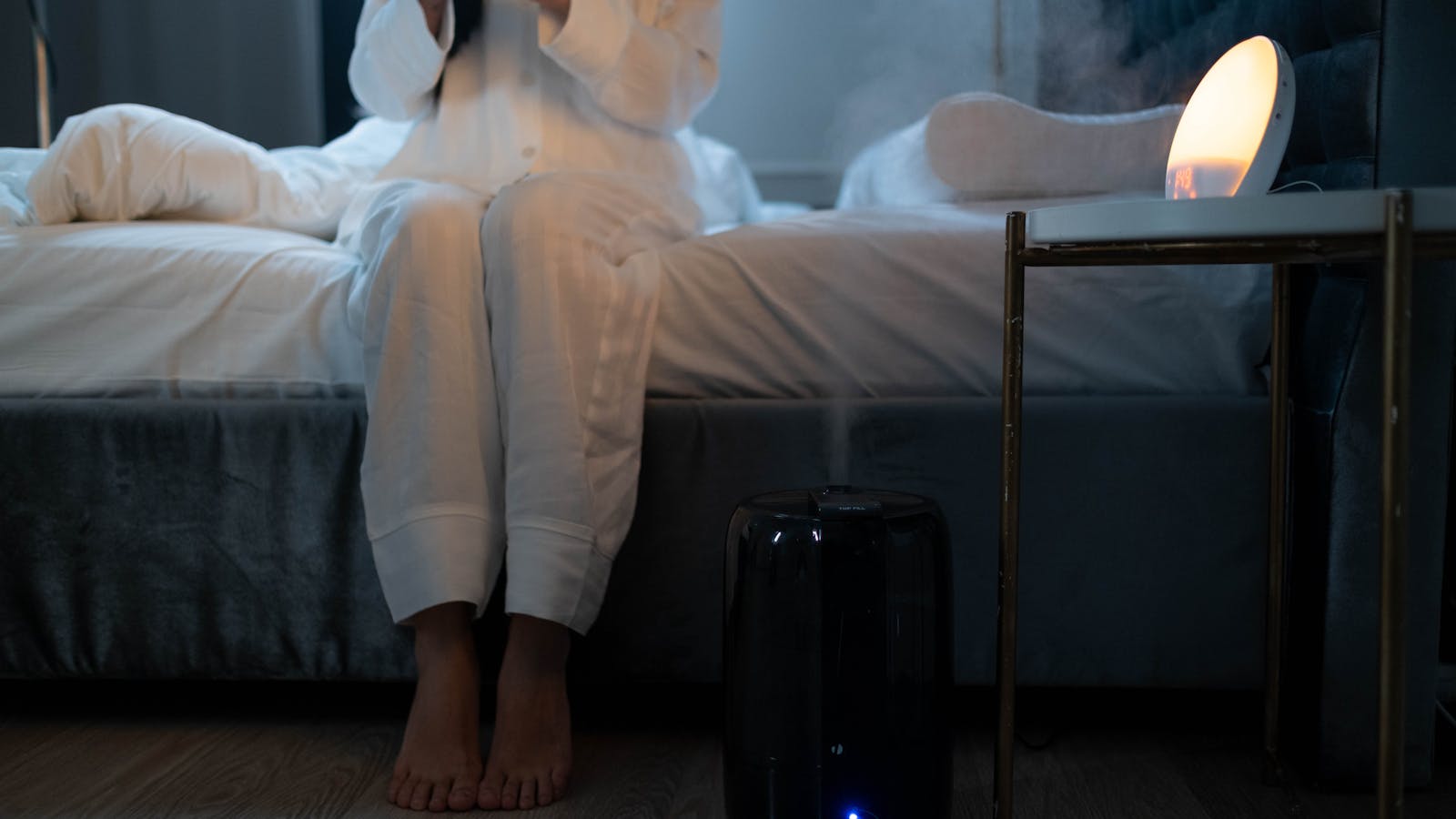
Cool mist, warm mist, ultrasonic, and evaporative humidifiers all add moisture, but they do it differently. The best bedroom choice depends on water quality, noise tolerance, cleaning habits, burn risk, and whether white dust would bother you.
EPA separates portable humidifiers into several design types and notes an important difference: ultrasonic and impeller units can disperse minerals from water, while evaporative and steam vaporizer humidifiers are not expected to disperse substantial amounts of minerals.
Quick Comparison
| Type | Best For | Main Tradeoff |
|---|---|---|
| Ultrasonic cool mist | Quiet visible mist, bedrooms, larger tanks, smart controls | Can disperse minerals from tap water as white dust unless low-mineral water is used |
| Warm mist or steam vaporizer | Winter comfort and warm vapor preference | Hot water and steam can burn, so placement matters around children and pets |
| Evaporative | Lower white-dust concern and steady invisible moisture | Fan sound and wick/filter replacement are part of ownership |
| Impeller cool mist | Cool mist without heat | Can also disperse minerals and needs regular cleaning |
Choose Ultrasonic If
- You want quiet operation and visible mist.
- You want app controls, display-off mode, or strong output in a compact unit.
- You are willing to use distilled or other low-mineral water.
- You can empty, dry, and clean the tank consistently.
Choose Evaporative If
- White dust or mineral aerosol is your top concern.
- You are comfortable with fan sound.
- You do not mind buying wick filters.
- You prefer invisible moisture that slows as room humidity rises.
Warm Mist Caution
Warm mist can feel comforting, but any hot-water unit adds burn risk. Choose cool mist or evaporative models around children, pets, or anyone who might pull the unit down or touch hot water.
Humidity Level Still Matters Most
EPA recommends keeping indoor humidity between 30 and 50 percent and avoiding humidity above 50 percent. Use a separate hygrometer because built-in humidifier readings can vary by placement and mist direction.
After choosing the type, use the HealthGlean bedroom humidifier guide to compare current picks by tank size, controls, cleaning needs, and filter or cartridge costs.
Size The Bedroom Air First
Ultrasonic mineral dust, evaporative wick care, and air purifier sizing often overlap in the same bedroom setup. Use the Air Purifier Room Size Calculator to estimate the CADR target, then compare product picks in the HealthGlean small-bedroom air purifier guide.
Sources And References
We checked these references on May 9, 2026. Humidifier designs, cleaning instructions, cartridge schedules, water recommendations, and room-size claims can change, so verify the exact product manual before buying or replacing parts.
- EPA Use and Care of Home Humidifiers
- EPA Care for Your Air indoor air quality guide
- MedlinePlus humidifiers and health
Informational note: This article is general education and shopping guidance, not medical advice. A humidifier may improve dry-air comfort, but it does not diagnose, treat, cure, or prevent cough, asthma, allergies, sinus disease, skin disease, sleep problems, mold illness, or other health conditions.