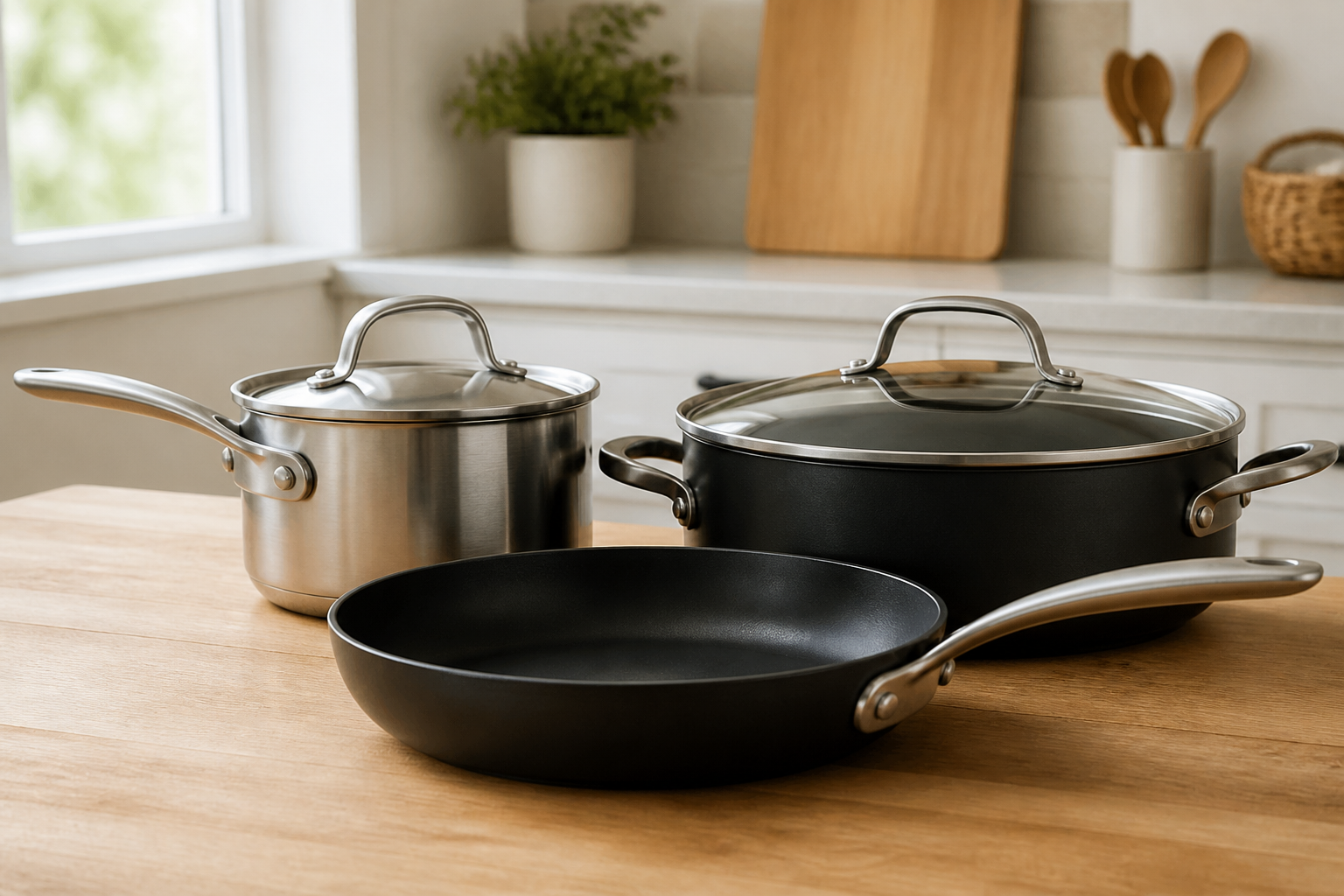

Best Non-Toxic Cookware Sets for Everyday Healthy Cooking
Affiliate disclosure: This guide contains affiliate links. If you buy through these links, HealthGlean may earn a commission at no extra cost to you. We separate product research from monetization and recommend that you verify current specifications before buying.
Updated: June 23, 2026.
HealthGlean Sprint Start: If you want the fastest shortlist, start with Caraway for a premium ceramic nonstick set, GreenPan Valencia Pro for ceramic nonstick value on induction, Tramontina Tri-Ply Clad for a durable stainless steel set, or Lodge cast iron for a lower-cost starter set. Then use the Quick Picks and Compare Before You Buy sections below to verify coating claims, heat limits, and maintenance tradeoffs before opening product links.
- Best premium ceramic nonstick set: Caraway Ceramic Cookware Set
- Best ceramic nonstick value for induction kitchens: GreenPan Valencia Pro 11-Piece Ceramic Nonstick Set
- Best durable PFAS-free stainless set: Tramontina Tri-Ply Clad 12-Piece Stainless Steel Set
- Best budget PFAS-free starter set: Lodge Seasoned Cast Iron 5 Piece Set
HealthGlean buying guide standards
How This Guide Was Reviewed
Written byHealthGlean Editorial Team
Review scopeProduct fit, source/spec checks, disclosure, and safety framing
Methodology reviewMay 13, 2026
Reviewer statusEditorial and safety/claims review; not medical review
For this Best Non-Toxic Cookware Sets for Everyday Healthy Cooking guide, we prioritize clear product fit, practical safety notes, official specifications, seller and manufacturer references, price and availability checks, and cautious health language. Affiliate links may earn HealthGlean a commission, but they do not change the criteria we use to compare products or explain limitations.
Methodology Checks
- Reader fit and use case: who the product is for, who should skip it, and what tradeoffs matter.
- Source and spec checks: official product pages, manufacturer details, standards bodies, public-health or safety references, and seller context when relevant.
- Safety and claims review: no diagnosis, treatment, cure, prevention, emergency, or guaranteed health-outcome language unless a qualified source clearly supports the statement.
- Monetization separation: affiliate relationships are disclosed, links are marked, and commission potential does not override product limitations.
- Publishing QA: source links, affiliate attributes, internal links, structured data, mobile readability, and correction contact path.
Update Triggers
- Major price, availability, model, warranty, recall, safety, or standards changes.
- A reader correction that identifies an outdated product detail, broken link, unclear claim, or source problem.
- New credible guidance from a public-health, safety, standards, or regulatory body that changes the buying advice.
- A guide moves into higher-risk medical-adjacent advice and needs named credentialed review before stronger claims are made.
Credentialed review boundary: We name a qualified reviewer only when a real clinician or specialist has reviewed that specific guide and the review scope can be described accurately. Until then, this guide should be read as general wellness and shopping information, not medical advice.
Trust signals checked before publication
- Visible HealthGlean Editorial Team byline or trust-panel attribution.
- Clear reviewer status that distinguishes editorial/safety review from medical review.
- Product methodology, affiliate disclosure, editorial policy, and medical disclaimer links near the comparison content.
- Source list or product-reference section for health, safety, standards, specifications, and maintenance claims.
- Correction and reviewer-inquiry route through contact@healthglean.com.
Read more about the HealthGlean Editorial Team, plus our Editorial Policy, Product Review Methodology, Affiliate Disclosure, and Medical Disclaimer. For corrections or reviewer inquiries, email contact@healthglean.com.
“Non-toxic cookware” is useful shorthand, but it is not a perfect shopping category. The better question is what the cooking surface is made from, how it should be used, and when it should be replaced. Ceramic nonstick, stainless steel, and cast iron can all be good choices, but they solve different kitchen problems.
For everyday healthy cooking, the safest purchase is usually the one you will use correctly: no overheated empty pans, no flaking coatings, no metal utensils on fragile surfaces, and no mystery materials. This guide focuses on clear material claims, practical care, and cookware that fits real home routines.
Quick Picks
| Pick | Best For | Why It Stands Out | Check Price |
|---|---|---|---|
| Caraway Ceramic Cookware Set | Best premium ceramic nonstick set | 12-piece ceramic-coated set with storage, made without PTFE, PFOA, PFAS, lead, and cadmium, with all-stovetop compatibility and oven use up to 550F. | Check Caraway cookware price |
| GreenPan Valencia Pro 11-Piece Ceramic Nonstick Set | Best ceramic nonstick value for induction kitchens | Hard-anodized ceramic nonstick set with PFAS-free positioning, Magneto induction base, dishwasher-safe claim, and oven use up to 600F with lids up to 425F. | Check GreenPan Valencia Pro price |
| Tramontina Tri-Ply Clad 12-Piece Stainless Steel Set | Best durable PFAS-free stainless set | Tri-ply 18/10 stainless steel with aluminum core, all-cooktop compatibility, oven use up to 500F, NSF certification, and lifetime-warranty positioning. | Check Tramontina stainless set price |
| Lodge Seasoned Cast Iron 5 Piece Set | Best budget PFAS-free starter set | Made in the USA, seasoned with vegetable oil, compatible with stovetop, induction, oven, grill, and campfire, and made without PFAS. | Check Lodge cast iron set price |
Quick Decision Path
Use this page after deciding whether you need ceramic nonstick convenience, stainless steel durability, cast iron heat retention, or a mixed set.
Buyer Fit Checklist
- Choose this guide if: you are replacing worn pans or choosing between ceramic nonstick, stainless steel, cast iron, or a mixed everyday set.
- Skip or slow down if: you want a cookware set to solve nutrition, detox, allergy, or medical concerns instead of a practical material and maintenance problem.
- Verify before buying: set pieces, cooking surface, coating claims, heat limits, induction compatibility, oven rating, utensil guidance, warranty, and replacement signs.
Before Buying Checks
- Choose by cooking style and care habits before treating non-toxic as one single product category.
- Check coating language, heat limits, utensil guidance, warranty, and replacement signs before buying.
- Avoid medical or detox claims; cookware choice is a practical material and maintenance decision.
- Compare the picks above: start with fit, safety, maintenance, and ownership cost before chasing the longest feature list.
- Validate the decision: read PFAS in cookware, ceramic vs stainless steel vs cast iron cookware, when to replace nonstick cookware before you buy.
- Build the related setup: compare water filters for healthier drinking water, meal prep containers for weekly eating, air purifiers for indoor-air decisions if this purchase is part of a broader home or wellness routine.
Compare Before You Buy
Use this table as a final decision check before opening product links. Some product links on this page may earn HealthGlean a commission at no extra cost to you; that does not affect the editorial guidance. Verify current specifications, warranty terms, availability, and return policy before checkout.
| Cookware type | Best fit | Slow down or avoid if | Verify before buying |
|---|---|---|---|
| Ceramic nonstick set | Useful for sticky everyday foods, lower-to-medium heat, and easier cleanup. | You regularly sear on high heat, use metal utensils, or want dishwasher-first maintenance. | PFAS/PTFE/PFOA wording, heat limit, utensil guidance, washing guidance, and realistic coating life. |
| Stainless steel set | Useful for durability, browning, oven use, and a coating-free cooking surface. | You mainly want effortless egg or pancake release and do not want to learn preheat and oil technique. | Tri-ply/full-clad vs disc base, induction compatibility, oven and lid temperature limits, and warranty. |
| Cast iron or carbon steel | Useful for high-heat cooking and long service life when you are willing to maintain the surface. | You want a lightweight, dishwasher-safe pan, or a qualified professional has told you to limit iron exposure. | Seasoning and care needs, pan weight, handle style, stovetop compatibility, and return policy. |
| Mixed cookware set | Useful when one household needs both easy-release pans and durable high-heat pieces. | The set includes many duplicate or filler pieces you will not use. | Actual pan sizes, lid fit, storage needs, replacement-piece availability, and total ownership cost. |
Best next step: choose the cooking surface first, then compare the product notes and retailer pages for current specs before buying.
Who This Guide Is For
This guide is for home cooks replacing scratched nonstick pans, building a first kitchen, moving toward PFAS-free cookware, or deciding whether ceramic, stainless steel, or cast iron makes more sense. It is not a medical guide, and no pan can make a meal healthy by itself.
Material First: What To Know
- Ceramic nonstick: usually positioned as PFAS-free and easy to clean, but the coating is still a surface that can wear. Use low-to-medium heat and soft utensils.
- Stainless steel: durable and coating-free, but it requires preheating and oil technique. It is excellent for searing, sauces, soups, and boiling.
- Cast iron: durable, PFAS-free, and naturally seasoned with oil, but heavy and maintenance-dependent. It can add some iron to food, which may matter for people told by a clinician to limit iron.
- Traditional PTFE nonstick: can be useful when kept intact and used within instructions, but shoppers avoiding PFAS usually choose ceramic, stainless, cast iron, carbon steel, or enamel instead.
How We Chose
- We prioritized official product pages with clear material, coating, heat-limit, and care details.
- We included both coated and uncoated cookware because “non-toxic” shoppers do not all need the same surface.
- We favored products with stable availability, recognizable model families, and direct Amazon product pages.
- We looked for realistic ownership tradeoffs: coating life, weight, dishwasher claims, induction support, and maintenance.
- We avoided claims that cookware can detox the body, cure disease, or make meals healthy without better ingredients and cooking habits.
Product Notes
Caraway Ceramic Cookware Set
Caraway is the premium design-forward pick for readers who want ceramic nonstick, coordinated storage, and a cleaner-looking countertop setup. The official cookware set includes the core pieces most households use: fry pan, saucepan, saute pan, Dutch oven, lids, and storage organizers. Caraway says the ceramic-coated cooking surface is made without PTFE, PFOA, PFAS, lead, and cadmium. The tradeoff is care: ceramic nonstick works best with low-to-medium heat, non-abrasive utensils, and hand washing.
- Pros: clean visual design; storage organizers included; PFAS-free ceramic-coated surface; oven safe up to 550F.
- Cons: premium price; coating needs gentle care; not dishwasher recommended by Caraway; not a lifetime stainless-style set.
- Best fit: Choose this if you want an attractive ceramic nonstick set for low-to-medium heat cooking and you are willing to protect the coating.
GreenPan Valencia Pro 11-Piece Ceramic Nonstick Set
GreenPan Valencia Pro is the practical ceramic nonstick pick when you want more pieces than Caraway and need induction compatibility. GreenPan lists the 11-piece set as hard-anodized aluminum with a diamond-infused ceramic nonstick coating, a Magneto induction base, and compatibility with all stovetops. It is easier to recommend than generic ceramic sets because the brand publishes clear collection-level details. Like all ceramic nonstick, it still deserves careful heat and utensil habits if you want it to last.
- Pros: induction ready; hard-anodized bodies; more cooking pieces than minimalist sets; oven safe up to 600F for pans.
- Cons: ceramic slickness can fade with rough use; glass lids have a lower heat limit; large set may be more than small kitchens need.
- Best fit: Choose this if you want ceramic nonstick, induction compatibility, and a fuller everyday set without jumping to the highest price tier.
Tramontina Tri-Ply Clad 12-Piece Stainless Steel Set
Tramontina Tri-Ply Clad is the better long-term pick if you want to avoid nonstick coatings entirely. The official Signature Tri-Ply line uses an aluminum core surrounded by stainless steel, which helps with even heating and removes the coating-wear problem from the equation. Stainless steel has a learning curve for eggs and delicate foods, but it is a workhorse material for searing, sauces, boiling, and everyday meals. It is the most sensible “buy it once” direction for many home cooks.
- Pros: no nonstick coating to wear out; tri-ply heat distribution; induction compatible; dishwasher safe and oven safe up to 500F.
- Cons: food can stick without technique; heavier than basic nonstick; not ideal for effortless eggs; nickel-sensitive readers may prefer another material.
- Best fit: Choose this if you want durable everyday cookware and are willing to learn stainless preheating, oil control, and deglazing.
Lodge Seasoned Cast Iron 5 Piece Set
Lodge Seasoned Cast Iron 5 Piece Set is the rugged budget pick for readers who want PFAS-free cookware that can last for decades. The set includes two skillets, a griddle, and a Dutch oven with lid. Cast iron is not the easiest material for everyone: it is heavy, needs drying and oiling, and can react with acidic foods if seasoning is weak. But for searing, baking, cornbread, pan pizza, and outdoor cooking, it is hard to beat the value.
- Pros: very durable; made without PFAS; works on many heat sources; strong value for multiple pieces.
- Cons: heavy; requires hand washing, drying, and oiling; can rust if neglected; may add iron to food.
- Best fit: Choose this if you want low-cost cookware for searing, baking, and long-term use and do not mind cast iron maintenance.
How To Choose
- Choose ceramic nonstick if eggs, pancakes, and easy cleanup matter most and you are comfortable replacing the set eventually.
- Choose stainless steel if durability, searing, sauces, and long-term value matter more than effortless release.
- Choose cast iron if you want inexpensive cookware that can handle high heat, baking, and outdoor use, and you will keep it dry and seasoned.
- Use mixed materials if you cook often: one ceramic pan for delicate foods, stainless for most meals, and cast iron for searing can be smarter than one giant set.
- Skip huge sets if half the pieces duplicate what you already own. A smaller set plus one excellent skillet is often better.
Safety Notes
Do not use cookware with flaking, peeling, or badly damaged coatings. Follow the brand heat limits, avoid preheating empty coated pans for long periods, and use ventilation when cooking at high heat.
FDA notes that some PFAS are authorized for nonstick cookware coatings and that those cookware coatings are made through a process that tightly binds polymerized molecules to the pan surface. That does not make every marketing claim meaningful. If your goal is PFAS avoidance, look for brands that plainly state the cooking surface is made without PFAS, PTFE, and PFOA, and then follow the care instructions that keep the surface intact.
Cast iron can transfer iron into food, especially with acidic recipes or long simmering. For most people this is not a problem, but readers with hemochromatosis, iron overload concerns, or medical advice to limit iron should ask a qualified clinician before relying heavily on cast iron.
What To Watch Out For
- One-word labels: “clean” and “non-toxic” mean little without material details.
- Dishwasher confusion: a product may be technically dishwasher safe while the brand still recommends hand washing for coating life.
- Too much high heat: ceramic nonstick is not the right surface for repeated ripping-hot searing.
- Set bloat: many large sets include filler pieces instead of the pan sizes you actually use.
- Search-page affiliate links: product buttons in this guide point to direct Amazon product pages, not generic search result pages.
Before You Buy
- Check whether your stovetop is induction, gas, electric, or ceramic glass.
- Confirm the exact set contents; color and piece counts can change by retailer.
- Read the care instructions before checkout, especially dishwasher, oven, and utensil limits.
- Check the weight if you have wrist, grip, or mobility concerns.
- Price replacement reality honestly: ceramic sets may need replacement sooner than stainless or cast iron.
- Verify current price and availability on the brand page and retailer page before buying.
FAQ
Is ceramic cookware always safer than stainless steel?
No. Ceramic nonstick and stainless steel are different tools. Ceramic is easier for sticky foods, while stainless is more durable and coating-free. The safer choice is the one you use within its care and heat limits.
Should I throw away every traditional nonstick pan?
Not automatically. Replace pans that are peeling, flaking, badly scratched, warped, or hard to clean. If your goal is PFAS-free cookware, move future purchases toward ceramic, stainless, cast iron, carbon steel, or enamel.
Can stainless steel leach metals?
Stainless steel can release small amounts of metals under certain cooking conditions, especially with acidic foods, but it is widely used for cookware. Nickel-sensitive readers may prefer nickel-free stainless, cast iron, carbon steel, enamel, or ceramic-coated options.
Is cast iron good for every household?
No. Cast iron is heavy and needs maintenance. It may also increase iron in food, which is not ideal for people who have been told to limit iron. For many other cooks, it is a durable PFAS-free workhorse.
Cookware Safety Basics
Before choosing a set, use these HealthGlean explainers to understand PFAS claims, cookware materials, and replacement timing:
- PFAS in cookware – A plain-English guide to PFAS cookware claims, nonstick coatings, labels, and practical ways to shop without turning cookware into a medical claim.
- ceramic vs stainless steel vs cast iron cookware – Compare ceramic nonstick, stainless steel, and cast iron cookware by cooking style, care needs, coating life, weight, and best-fit kitchen routines.
- when to replace nonstick cookware – Know the practical replacement signs for nonstick cookware, including flaking, deep scratches, warping, loose handles, and coating failure.
Next HealthGlean Guides
Use these related HealthGlean guides to keep building the same sleep, home-wellness, and fitness setup. Start with the highest-intent product paths when you are comparing purchases, then move into the supporting guides that match your room, routine, or safety concern.
Priority Buyer-Intent Guides
- quiet bedroom air purifier picks – compare quiet CADR-focused machines for cleaner bedroom air.
- water filters for healthier home drinking water – match pitchers and under-sink filters to your water-quality needs.
- massage guns for post-workout recovery – compare gentle, premium, serious-recovery, budget, and compact options with safety cautions.
- fitness trackers for sleep, steps, and everyday wellness – compare Fitbit, Apple, Garmin, and Amazfit picks with sleep, privacy, battery, and compatibility notes.
More Related Buying Guides
- white noise machines for bedrooms and home offices – choose a sound machine for sleep, focus, or shared spaces.
- sunrise alarm clocks for gentler mornings – build a calmer wake-up routine with light, sound, and backup alarms.
- mattress toppers for back support and pressure relief – compare topper materials, firmness, and comfort tradeoffs before replacing a mattress.
- humidifiers for dry bedrooms and better comfort – choose a bedroom humidifier with the right humidity and cleaning habits.
- HEPA vacuums for dust, pet hair, and cleaner indoor air – compare sealed filtration, bagged disposal, pet-hair tools, and allergy-aware cleaning habits.
- weighted blankets for calm comfort and better sleep – choose a safe weight, breathable material, and washable design for your bedtime routine.
- cooling pillows for hot sleepers – match cooling materials, loft, and neck support before replacing your pillow.
- walking pads for home offices and small spaces – compare desk safety, noise, speed, deck size, and weight-capacity tradeoffs.
- adjustable dumbbells for compact home gyms – compare loading ranges, adjustment mechanisms, floor safety, storage, and recall-aware buying notes.
- resistance bands for beginner home workouts – compare tube bands, loop bands, pull-up bands, anchor safety, latex notes, and beginner loading.
- exercise mats for home workouts – compare grip, thickness, materials, odor claims, floor safety, storage, and workout fit.
- exercise bikes for low-impact cardio at home – compare bike fit, resistance systems, noise, storage, weight capacity, and low-impact safety notes.
- rowing machines for full-body home workouts – compare air, magnetic, connected, and budget rowers with technique and recall-aware buying notes.
- meal prep containers for healthy weekly eating – compare glass, plastic, divided lunch boxes, and freezer trays with food-safety notes.
- red light therapy devices for home wellness routines – compare panels, masks, wands, and belts with FDA-clearance, eye-safety, and overuse cautions.
- sauna blankets for home recovery routines – compare heat ranges, timers, voltage, hydration, burn risk, and recall-aware buying notes.
Browse all HealthGlean buying guides.
Sources And Product References
We checked official product pages and food-contact safety references on May 3, 2026. Product pricing, availability, set contents, coating language, colors, and care instructions can change, so verify the exact model before buying.
- Caraway Ceramic Cookware Set official product page
- GreenPan Valencia Pro 11-Piece official product page
- Tramontina Signature Tri-Ply Clad official product page
- Lodge Seasoned Cast Iron 5 Piece Set official product page
- FDA authorized uses of PFAS in food contact applications
- FDA food packaging and food contact substances consumer information
Medical disclaimer: This article is for informational purposes only and is not medical advice.