What Size Cookware Set Do You Actually Need?
Cookware set shopping often starts in the wrong place. Buyers see 10 pieces, 12 pieces, or 15 pieces and assume more is automatically better. Then the set arrives and half the pieces barely leave the cabinet. The real question is not how many pieces sound impressive on the box. It is how many pieces your kitchen, stovetop, storage space, and cooking routine will actually use.
That matters because filler pieces can make a set feel like a deal while adding almost no everyday value. A household that cooks simple meals for one or two people usually does not need the same set size as a family that cooks frequently across several burners. Choosing the right size first can save money, reduce clutter, and make the eventual material decision much easier.
This article stays focused on set size only. If you are still deciding between ceramic, stainless steel, and cast iron, use HealthGlean’s broader cookware comparison first. If you are ready to compare full cookware directions and products, use the HealthGlean cookware buyer guide. If your concern starts with cookware labels and PFAS language, the PFAS cookware guide is the better place to start.
What Size Cookware Set Do You Actually Need: Quick Answer
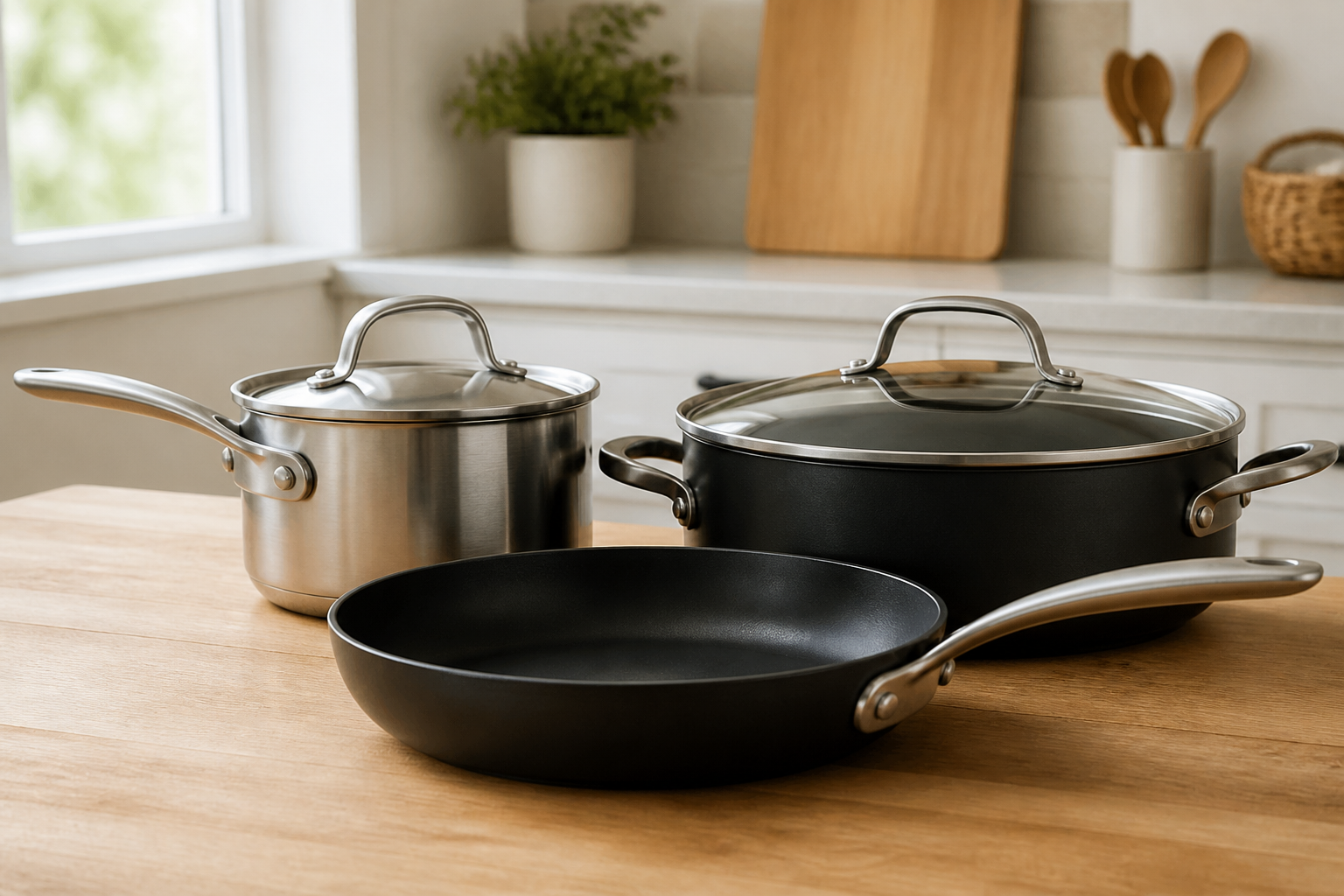
Many solo kitchens do well with a 3-to-5-piece core built around one skillet, one saucepan, and one larger pot or saute-style piece if it matches the routine.
Couples often need a little more flexibility, not a giant set. A modest set or a few well-chosen pieces usually covers most weeknight cooking better than a filler-heavy box.
Families may benefit from more pieces only when the kitchen actually cooks at that volume and has the storage and burner space to use them well.
Why Piece Count Misleads Buyers
Cookware boxes can make a set look more complete than it really is. Piece count often includes lids, small utility pieces, or duplicate sizes that add to the number without adding much to daily cooking. Buyers then think they are upgrading when they are mostly increasing storage pressure.
This is why piece count alone is a weak decision tool. A smaller set with more useful pieces can fit better than a larger set filled with rarely used items. The value comes from fit, not from the number printed on the packaging.
A Good Starting Size For Solo Kitchens
Solo kitchens usually need fewer pieces than marketing suggests. One medium skillet, one saucepan, and one larger pot or saute pan often cover more real cooking than a much bigger set. That is especially true when storage is limited or the kitchen is working with a smaller stovetop.
The goal is not to own every format. It is to have the pieces that show up repeatedly in breakfast, quick lunches, pasta, rice, reheating, and simple one-pan meals. If a solo cook rarely uses large-batch cookware, a bigger set can feel like clutter more than value.
A Good Starting Size For Couples
Couples usually benefit from one extra layer of flexibility rather than a dramatic jump in piece count. A second useful pan size, a better everyday pot, or a piece that handles sauces and larger weeknight meals can matter more than adding several small extras.
This is where a medium-size cookware set can make sense if the pieces are chosen well. But it still only works when the set avoids redundant sizes and matches what the household actually cooks.
A Good Starting Size For Families
Families and heavier home cooks often have the strongest case for more pieces, but only when the kitchen regularly uses them. Bigger meals, simultaneous burners, batch cooking, and soup or pasta nights can justify larger pots and one or two extra pans.
Even then, bigger is not always better. A family kitchen can still overbuy by choosing a high piece count with awkward storage and too many overlapping sizes. More pieces only help when they solve a real routine problem.
Which Pieces Matter More Than The Count
The most useful sets usually start with the pieces that carry everyday cooking. A dependable skillet, a practical saucepan, and a larger pot or saute pan often do the real work. That matters more than whether the box contains several bonus pieces that look impressive but rarely get used.
This is also why some buyers do better with a smaller set plus one carefully chosen add-on later. It keeps the kitchen focused on the pieces that actually earn cabinet space.
When A Big Set Is Mostly Filler
A big set is often mostly filler when the added pieces are tiny variations on pieces you already have, lids are inflating the count, or the kitchen does not have enough burners or storage to make the extra pieces practical. In those cases, the buyer is paying for the feeling of completeness more than for better cooking coverage.
That can be especially frustrating in smaller homes or apartments where unused cookware becomes visible clutter quickly. The larger set may feel like an upgrade on day one and feel annoying by month two.
Storage And Stovetop Space Reality Checks
Storage and burner space should be part of the buying decision before a set is chosen, not after. A kitchen with limited cabinet room, one small drawer stack, or a narrow stovetop may not support a large set well even if the buyer likes the idea of one.
This matters because cramped storage makes good cookware harder to use consistently. If pans are stacked awkwardly, lids are hard to reach, or the kitchen cannot use several pieces at once, the set may be oversized for the space even if it looks like a deal.
When Open-Stock Pieces Make More Sense
Open-stock buying often makes more sense when the reader already knows which piece is missing. If the kitchen only needs a better skillet, a larger pot, or one more versatile sauce pan, forcing a full set into the home can be wasteful.
This approach also works well for readers who are still learning what material they like. One or two pieces can answer real-fit questions faster than a full boxed commitment.
Should You Choose Material First Or Set Size First?
In many kitchens, set size and material work together. The reader should usually know the approximate set size first, then compare materials inside that size range. That keeps the material decision tied to real kitchen use instead of abstract preference.
If that part is still unclear, go back to HealthGlean’s material comparison guide and then use the main cookware buyer guide once the routine fit is clearer.
What To Check Before Buying
- Household size: Match the set to who the kitchen actually cooks for most days.
- Meal style: Separate batch cooking and frequent multi-pan meals from simpler routines.
- Storage space: Make sure the kitchen can hold the set without making daily access annoying.
- Stovetop space: Large sets matter less when the kitchen cannot use several pieces at once.
- Core-piece usefulness: Judge the set by the pieces you will use weekly, not by the headline count.
- Material fit: If the material is still unclear, compare that first before buying a large set.
FAQ
Is a 10-piece cookware set too big?
It can be if the count includes several pieces your kitchen will rarely use. The better question is whether the actual pans and pots fit your routine, not whether the number sounds generous.
How many cookware pieces does one person really need?
Many solo cooks do well with a small core of about three to five useful pieces rather than a large set with filler.
Should couples buy a full cookware set?
Sometimes, but only if the set pieces are genuinely useful. Many couples do better with a modest set or a few well-chosen open-stock pieces.
Is it better to buy a set or individual pans?
That depends on whether the set solves a real kitchen need without adding clutter. If you already know the one missing piece, individual pans can make more sense.
Should I choose cookware material before set size?
Usually you should know your rough size needs first, then compare materials inside that range so the final choice stays tied to how the kitchen really cooks.
Editorial note: This draft is designed as an informational support article. It contains no product picks, no affiliate links, and no product-rating claims.