Cast Iron vs Enameled Cast Iron for Everyday Cooking
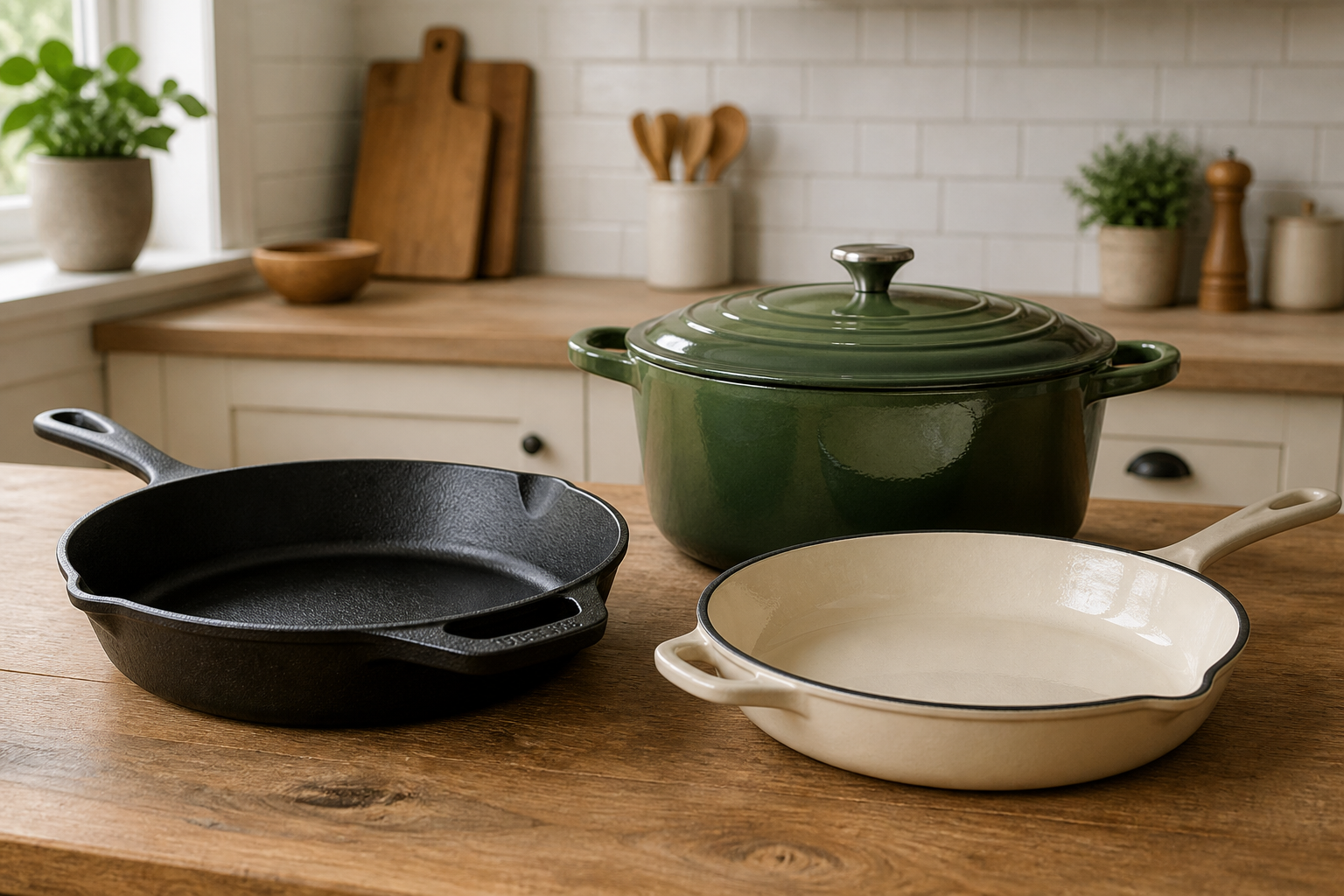
Traditional cast iron and enameled cast iron can look close enough that buyers treat them like small variations of the same thing. In real kitchens, they often feel different day to day. One asks for more seasoning and maintenance but usually costs less and handles hard use well. The other often feels easier to live with, especially for sauces and cleanup, but comes with its own tradeoffs around cost and long-term care.
That is why this decision matters before a reader buys a full cookware set. The question is not just whether cast iron cooks well. It is whether the reader actually wants the routine that comes with traditional cast iron or would rather pay for a version that asks less in daily use.
This article stays focused on that two-way decision only. If you are comparing full cookware sets, use HealthGlean’s cookware buyer guide. If you are comparing cast iron against other materials entirely, use the broader ceramic vs stainless steel vs cast iron guide. If your concern starts with cookware labels and PFAS language, the PFAS cookware guide is the better place to start.
Next: compare cookware options before you buy. See the HealthGlean cookware buying guide to compare ceramic, stainless steel, and cast iron cookware options by upkeep, durability, and everyday fit.
Use this page if upkeep is the real question
This page is most useful when you are weighing maintenance, cleanup, and budget instead of assuming all cast-iron-style cookware fits the same routine.
Cast Iron vs Enameled Cast Iron: Quick Answer
Choose traditional cast iron first if lower cost, seasoning control, and harder-wearing high-heat use matter most to you. It often fits cooks who do not mind maintenance and want a pan they can keep working with over time.
Choose enameled cast iron first if easier cleanup, lower maintenance, and a more forgiving surface for daily meals matter more than getting the lowest entry price.
Choose both or a mixed kitchen if you want the strengths of cast iron without forcing one piece to do every job. That is often more practical than trying to make one material solve every cooking habit.
What Changes In Everyday Cooking?
The main difference is not just appearance. It is routine. Traditional cast iron asks you to think more about seasoning, drying, and maintenance. Enameled cast iron often removes some of that daily friction, especially for readers who want a heavy heat-retaining pot or pan without treating it like a maintenance project.
That means two buyers can like cast iron for totally different reasons. One may want the durability and lower cost of traditional cast iron. Another may want the steady heat of cast iron but dislike seasoning enough that enameled cast iron is the only version they will consistently enjoy using.
Seasoning, Cleanup, And Maintenance
Traditional cast iron usually comes with more maintenance expectations. Even when the routine becomes normal, it is still a routine. Readers need to be comfortable with drying, seasoning awareness, and a little more attention after cooking.
Enameled cast iron usually feels easier here. It can lower the maintenance barrier for readers who like the idea of cast iron but do not want every cleanup decision to feel like part of a care system. That does not mean enameled pieces are maintenance-free. It means the upkeep usually feels less specialized.
This section often decides the purchase before cooking performance does. If the reader already knows they dislike special upkeep, enameled cast iron may be the better everyday fit even if traditional cast iron looks like the tougher value on paper.
Acidic Foods, Sauces, And Simmering
This is one of the most practical differences in real kitchens. Readers who cook tomato sauces, braises, stews, or other simmered meals often prefer the lower-friction experience of enameled cast iron for those jobs. It can feel like the more natural match for stovetop-to-oven cooking that includes liquids or more delicate cleanup afterward.
Traditional cast iron can still be useful in many kitchens, but the reader should be honest about what they cook most often. If a lot of meals involve sauces, simmering, or acidic ingredients, the easier day-to-day experience of enameled cast iron can matter more than the romance of bare cast iron.
Weight, Durability, And Everyday Handling
Both options are heavy enough that handling matters. If a reader already struggles with lifting, storage, or moving cookware from stove to sink to oven, the everyday experience matters just as much as the material story.
Traditional cast iron often appeals to readers who want something tough and long-lived. Enameled cast iron often appeals to readers who want cast-iron-style cooking with a little less friction in the rest of the experience. In both cases, weight and handling should be part of the buying decision, not an afterthought.
When Traditional Cast Iron Fits Better
Traditional cast iron usually makes more sense for readers who want the lower-cost path into cast iron, do not mind seasoning, and like the idea of learning one pan well over time. It can also fit cooks who prefer a simpler, more bare-bones tool and do not need the pan to be low-maintenance.
When Enameled Cast Iron Fits Better
Enameled cast iron usually fits better when the reader wants easier cleanup, lower-maintenance everyday use, and a cast-iron-style piece that feels less specialized. It often makes more sense for cooks who want braises, soups, sauces, and one-pot meals to feel easier, not more demanding.
Start With One Piece Or A Full Set?
Most readers do not need a full cast-iron direction all at once. One skillet or one enameled Dutch-oven-style piece can answer the real fit question faster than a large set purchase. If the reader is still learning what they like, a single piece is usually a better first test than a full commitment.
If you later decide you want a broader cookware setup, use the HealthGlean cookware guide to compare how cast iron fits beside ceramic and stainless options.
What To Check Before Buying
- Your cleanup tolerance: Decide how much maintenance you are actually willing to keep up with.
- Your cooking style: Think about whether you mostly sear, simmer, braise, or cook acidic foods often.
- Your storage and lifting comfort: Weight matters more than many buyers expect.
- Your first-piece goal: Decide whether you want one test piece or a whole cookware direction.
- Your real routine: Pick the option you are most likely to use often, not just admire in theory.
When To Use The Broader Cookware Guides Instead
If you already know you want cast iron in some form, this article has done its job. The next question is whether you are comparing full cookware systems or other materials. That is where the broader HealthGlean cookware guides become more useful.
Use the cookware buyer guide if you are comparing full set directions. Use the three-material comparison guide if you are still deciding how cast iron compares with ceramic or stainless steel overall.
Before you commit to a full set, use the HealthGlean cookware buying guide to compare ceramic, stainless steel, and cast iron directions side by side.
FAQ
Is enameled cast iron easier to maintain?
For many readers, yes. It often feels lower-friction in cleanup and everyday use, especially if they do not want to think much about seasoning.
Does traditional cast iron last longer?
It often appeals to readers who want a durable, hard-wearing pan they can keep working with over time, but real lifespan still depends on how it is used and maintained.
Which one is better for sauces and simmering?
Enameled cast iron often feels more natural for these jobs because many readers find it easier for liquid-heavy and acidic cooking routines.
Should I buy one piece first instead of a set?
Usually yes. One piece often teaches you more about real fit than a full set purchase made too early.
Is cast iron or enameled cast iron better for everyday cooking?
That depends on whether you value lower cost and seasoning control more than easier cleanup and lower-maintenance daily use.
Editorial note: This draft is designed as an informational support article. It contains no product picks, no affiliate links, and no product-rating claims.